


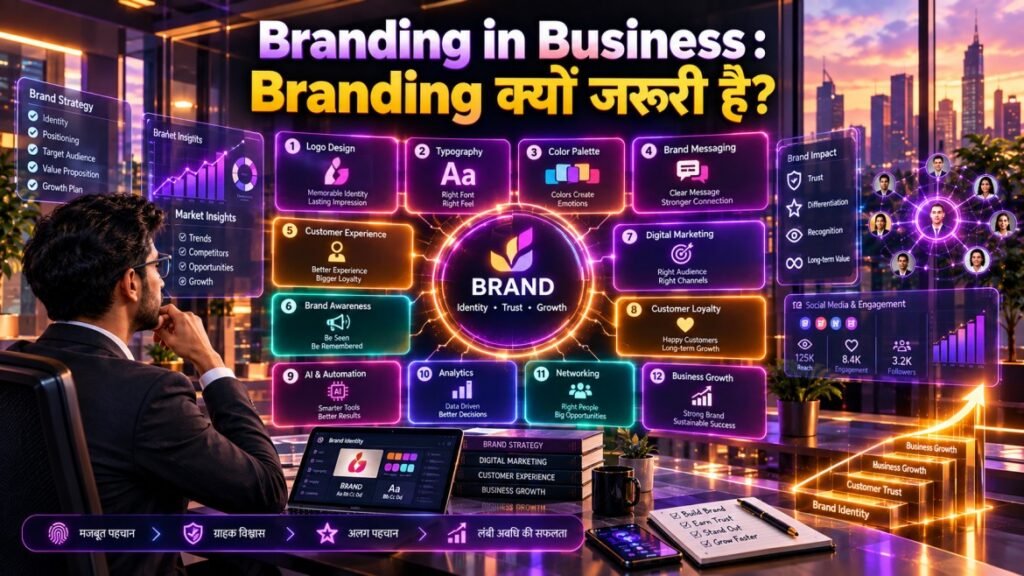
आज के competitive business environment में केवल अच्छा product या service होना हमेशा पर्याप्त नहीं होता। Customers के सामने हजारों brands मौजूद हैं, इसलिए किसी business के लिए यह जरूरी है कि लोग उसे पहचानें, याद रखें और उस पर भरोसा करें। यहीं Branding in Business महत्वपूर्ण भूमिका निभाती है।
Branding केवल logo, रंग या एक आकर्षक tagline बनाने का नाम नहीं है। यह उस पूरी identity और experience से जुड़ी है जो customers किसी business के बारे में महसूस करते हैं। Website से लेकर packaging, customer service, social media communication और product quality तक, हर interaction brand perception को प्रभावित कर सकता है।
आज AI, social media, e-commerce और digital transformation ने businesses के लिए branding के नए अवसर पैदा किए हैं। एक छोटा business भी digital platforms के माध्यम से अपने target audience तक पहुंच सकता है और एक recognizable identity विकसित कर सकता है।
इस लेख में हम समझेंगे कि Branding in Business क्या है, यह क्यों जरूरी है, इसके प्रमुख elements कौन-से हैं, businesses किन challenges का सामना करते हैं और आने वाले future में branding किस तरह बदल सकती है।
Table of Contents
Branding in Business क्या है?
Branding in Business वह strategic process है जिसके माध्यम से कोई organization अपने business की distinct identity, positioning और customer perception विकसित करती है।
इसमें केवल visual identity शामिल नहीं होती, बल्कि कई components मिलकर brand बनाते हैं:
- Brand name
- Logo
- Colors
- Typography
- Brand voice
- Messaging
- Product experience
- Customer service
- Company values
- Reputation
- Digital presence
सरल शब्दों में, branding का उद्देश्य यह स्पष्ट करना है कि आपका business कौन है, किसके लिए है और customers को क्या value देता है।
Branding और Marketing में क्या अंतर है?
Branding और marketing एक-दूसरे से जुड़े हैं, लेकिन दोनों समान नहीं हैं।
Branding
Branding business की identity और perception बनाने पर केंद्रित होती है।
Marketing
Marketing उन products या services को target audience तक पहुंचाने और promote करने के लिए विभिन्न channels का उपयोग करती है।
उदाहरण के लिए, किसी restaurant का:
- Logo और visual identity = Branding
- Brand personality = Branding
- Instagram campaign = Marketing
- Discount advertisement = Marketing
- Customer experience = Branding + Operations
इसलिए Branding in Business marketing strategy की foundation को मजबूत कर सकती है।
Branding क्यों जरूरी है?
1. Business को पहचान देती है
एक strong brand customers को business पहचानने में मदद कर सकता है।
यदि logo, colors, messaging और overall experience consistent हों, तो audience के लिए brand को अलग-अलग platforms पर पहचानना आसान हो जाता है।
उदाहरण:
एक customer किसी website पर आपके brand को देखता है और बाद में वही visual identity social media पर दिखाई देती है। Consistency recognition को support कर सकती है।
2. Customer Trust बनाने में मदद करती है
लोग अक्सर उन businesses के साथ काम करना पसंद करते हैं जिनके बारे में उन्हें स्पष्ट जानकारी और consistent experience मिलता है।
Professional branding यह communicate कर सकती है कि business:
- Serious है
- Organized है
- अपने customers को समझता है
- Quality पर ध्यान देता है
- अपनी identity के प्रति consistent है
हालांकि branding अकेले trust की guarantee नहीं देती। वास्तविक product quality और customer experience भी महत्वपूर्ण हैं।
3. Competition से अलग पहचान बनाने में मदद
कई industries में products और services के features एक जैसे हो सकते हैं।
ऐसी स्थिति में brand positioning differentiation में मदद कर सकती है।
उदाहरण
मान लीजिए एक शहर में 20 coffee shops हैं।
सभी coffee बेचते हैं, लेकिन एक brand:
- Premium experience पर focus करता है
- दूसरा affordability पर
- तीसरा sustainability पर
- चौथा young professionals पर
यह positioning अलग-अलग customer segments के लिए distinct identities बना सकती है।
यही Branding in Business का strategic value है।
4. Customer Loyalty को Support करती है
जब customers किसी brand के साथ positive experiences जोड़ते हैं, तो वे future में उसी brand पर दोबारा विचार कर सकते हैं।
Loyalty को support करने वाले factors में शामिल हो सकते हैं:
- Consistent quality
- Reliable service
- Positive experience
- Clear communication
- Customer support
- Brand values
इसलिए Branding in Business केवल नए customers को attract करने के बारे में नहीं है; existing customer relationships को मजबूत करना भी इसका हिस्सा हो सकता है।
Branding in Business के प्रमुख Elements
1. Brand Name
Brand name सरल, याद रखने योग्य और business positioning के अनुरूप होना चाहिए।
नाम चुनते समय:
- Pronunciation देखें
- Spelling सरल रखें
- Domain availability check करें
- Trademark conflicts की जांच करें
- Different markets में meaning देखें
2. Logo
Logo brand की visual पहचान का एक महत्वपूर्ण हिस्सा है।
एक effective logo:
- Recognizable हो
- विभिन्न sizes में काम करे
- Digital और print दोनों में usable हो
- Brand personality को reflect करे
लेकिन business की पूरी identity केवल logo पर निर्भर नहीं होनी चाहिए।
3. Brand Colors
Colors visual recognition और emotional associations को प्रभावित कर सकते हैं।
उदाहरण के लिए:
- Green को कई contexts में nature या sustainability से जोड़ा जाता है।
- Black premium positioning को communicate कर सकता है।
- Orange energy और enthusiasm का impression दे सकता है।
- Purple creativity या premium positioning से जुड़ सकता है।
Color selection industry और target audience के अनुसार करनी चाहिए।
4. Typography
Fonts भी brand personality का हिस्सा हैं।
एक technology company modern typography चुन सकती है, जबकि किसी traditional business के लिए अधिक classic typography उपयुक्त हो सकती है।
सबसे महत्वपूर्ण बात readability और consistency है।
5. Brand Voice
Brand customers से किस तरह बात करता है, यह भी branding का महत्वपूर्ण हिस्सा है।
Brand voice हो सकती है:
- Professional
- Friendly
- Educational
- Conversational
- Premium
- Innovative
एक बार voice तय करने के बाद website, social media, emails और advertisements में consistency बनाए रखना उपयोगी होता है।
6. Brand Story
Storytelling customers को business के पीछे की journey समझने में मदद कर सकती है।
एक effective brand story में बताया जा सकता है:
- Business क्यों शुरू हुआ?
- कौन-सी problem solve करनी थी?
- किस audience के लिए बनाया गया?
- कौन-से values महत्वपूर्ण हैं?
- आगे का vision क्या है?
Authentic storytelling brand को अधिक relatable बना सकती है।
Branding in Business कैसे शुरू करें?
Step 1: Target Audience समझें
सबसे पहले यह समझें कि आपका ideal customer कौन है।
Research करें:
- Age group
- Location
- Needs
- Problems
- Buying behavior
- Budget
- Preferences
Step 2: Competitor Research करें
Competitors की branding analyze करें।
देखें:
- वे किस audience को target करते हैं?
- उनका positioning क्या है?
- उनकी visual identity कैसी है?
- वे किस language का उपयोग करते हैं?
- Customers उनकी brand के बारे में क्या कहते हैं?
Competitor research का उद्देश्य copying नहीं, बल्कि market gap पहचानना होना चाहिए।
Step 3: Unique Value Proposition बनाएं
अपने business को एक clear reason दें कि customer आपको क्यों चुने।
उदाहरण:
“Small businesses के लिए सरल और affordable accounting solutions.”
यह positioning product की value को concise तरीके से communicate करती है।
Step 4: Visual Identity तैयार करें
अब develop करें:
- Logo
- Color palette
- Typography
- Image style
- Graphic elements
इन सभी के लिए brand guidelines बनाना useful हो सकता है।
Step 5: Brand Messaging तैयार करें
अपनी communication के लिए consistent messaging बनाएं।
इसमें शामिल हो सकते हैं:
- Tagline
- About statement
- Product descriptions
- Social media messaging
- Website copy
- Customer communication
Digital Branding का महत्व
आज Branding in Business offline identity तक सीमित नहीं है।
Customers brand को कई digital touchpoints पर देखते हैं:
- Website
- Google Search
- Social media
- YouTube
- Mobile apps
- Online marketplaces
- Reviews
इसलिए digital branding में consistency महत्वपूर्ण हो जाती है।
यदि website professional दिखती है लेकिन social media पर communication inconsistent है, तो overall brand perception प्रभावित हो सकता है।
Digital Transformation का Branding पर Impact
Digital transformation ने businesses को customers तक पहुंचने के नए तरीके दिए हैं।
अब brands:
- Customer data analyze कर सकते हैं
- Personalized experiences create कर सकते हैं
- AI-assisted content बना सकते हैं
- Automated customer support दे सकते हैं
- Social media conversations monitor कर सकते हैं
- Digital campaigns measure कर सकते हैं
इस impact के कारण branding अब केवल creative department की responsibility नहीं रह गई है। Marketing, technology, customer service, sales और product teams भी brand experience को प्रभावित करते हैं।
उदाहरण के लिए, यदि किसी company की advertising premium experience का promise करती है लेकिन उसका customer support खराब है, तो advertising और actual brand experience के बीच gap पैदा हो सकता है।
AI और Branding in Business
AI branding workflows को तेजी से बदल रहा है।
Businesses AI का उपयोग कर सकते हैं:
- Content ideation
- Audience research
- Market analysis
- Customer segmentation
- Image generation
- Copy variations
- Sentiment analysis
- Social listening
- Campaign analysis
लेकिन AI-generated content को human review की आवश्यकता हो सकती है।
Brand identity में authenticity महत्वपूर्ण है। यदि हर business एक जैसे AI-generated visuals और generic messaging का उपयोग करेगा, तो differentiation कठिन हो सकता है।
इसलिए Branding in Business में AI को creative assistant की तरह उपयोग करना अधिक practical हो सकता है, जबकि final brand decisions human strategy और customer understanding पर आधारित रहें।
Future of Branding
Branding का future technology और consumer expectations दोनों से प्रभावित होगा।
Hyper-Personalization
AI और customer data businesses को अधिक personalized communication बनाने में मदद कर सकते हैं।
लेकिन personalization के साथ privacy और responsible data use भी महत्वपूर्ण होंगे।
AI-Generated Brand Assets
AI तेजी से:
- Images
- Videos
- Copy
- Presentations
- Advertisements
generate करने में मदद कर रहा है।
Future में brand teams इन tools का अधिक उपयोग कर सकती हैं।
Interactive Brand Experiences
AR, VR, 3D experiences और interactive websites brands को traditional advertising से आगे जाने का अवसर दे सकते हैं।
Purpose-Driven Branding
Customers कुछ markets में businesses के values और social/environmental practices पर अधिक ध्यान दे सकते हैं।
लेकिन purpose communication वास्तविक business practices से supported होना चाहिए।
Personal Branding और Corporate Branding का Integration
Founders और employees की online presence company brand को प्रभावित कर सकती है।
LinkedIn, podcasts, videos और professional communities इस relationship को और मजबूत कर सकते हैं।
Branding के प्रमुख Challenges
1. Brand Consistency बनाए रखना
अलग-अलग teams और platforms पर inconsistent messaging brand identity को कमजोर कर सकती है।
Solution
Clear brand guidelines बनाएं और teams को उनका उपयोग करना सिखाएं।
2. बदलते Customer Expectations
Customer preferences समय के साथ बदलती रहती हैं।
इसलिए branding को static रखने के बजाय periodically review करना चाहिए।
3. Market में High Competition
Digital platforms ने नए businesses के लिए entry आसान की है।
इससे competition भी बढ़ा है।
Differentiation के लिए केवल attractive design पर्याप्त नहीं है। वास्तविक value और customer experience महत्वपूर्ण हैं।
4. Negative Reviews
Online reviews brand reputation को प्रभावित कर सकते हैं।
Businesses को:
- Reviews monitor करने चाहिए
- Genuine complaints का जवाब देना चाहिए
- Problems resolve करने का प्रयास करना चाहिए
- Fake reviews से बचना चाहिए
- Customers को respectful communication देना चाहिए
5. Rebranding का Risk
कभी-कभी business को अपनी identity बदलने की आवश्यकता हो सकती है।
लेकिन अचानक और poorly planned rebranding existing customer recognition को प्रभावित कर सकती है।
Rebranding से पहले research, communication और implementation planning आवश्यक है।
Branding in Business से Opportunities
Strong branding businesses को कई strategic opportunities दे सकती है।
Market Expansion
एक recognizable identity नए markets में entry को support कर सकती है।
Premium Positioning
Strong perceived value businesses को premium positioning develop करने में मदद कर सकती है, हालांकि pricing हमेशा actual customer value और market conditions के अनुरूप होनी चाहिए।
Customer Relationships
Consistent brand experiences long-term customer relationships को support कर सकते हैं।
Talent Attraction
Employees भी ऐसे organizations की ओर आकर्षित हो सकते हैं जिनकी professional reputation स्पष्ट हो।
Digital Growth
Strong branding social media, content marketing, e-commerce और digital advertising में consistency create कर सकती है।
Small Business के लिए Branding Strategy
यदि आप छोटा business चला रहे हैं तो आपको शुरुआत में महंगा branding agency package लेने की आवश्यकता नहीं हो सकती।
एक practical approach:
Month 1
- Target audience research
- Competitor analysis
- Brand positioning
- Name finalization
Month 2
- Logo
- Colors
- Typography
- Website
- Social profiles
Month 3
- Content strategy
- Customer feedback
- Brand awareness campaigns
- Performance measurement
इस process में budget से अधिक clarity और consistency महत्वपूर्ण हो सकती है।
Branding को Measure कैसे करें?
Branding के results केवल likes से measure नहीं किए जाने चाहिए।
कुछ useful indicators हैं:
- Brand searches
- Website traffic
- Direct traffic
- Customer surveys
- Repeat purchases
- Conversion rate
- Customer retention
- Social engagement
- Review sentiment
- Lead quality
हर metric को business objective से जोड़कर देखना चाहिए।
Common Branding Mistakes
इन गलतियों से बचें:
- केवल logo पर focus करना
- Competitor की identity copy करना
- Target audience को define न करना
- हर platform पर अलग messaging रखना
- Brand promise और actual experience में gap रखना
- बिना strategy के trends follow करना
- AI-generated content को बिना review publish करना
- Customer feedback ignore करना
- बहुत जल्दी rebrand करना
- Results measure न करना
Effective Branding in Business एक continuous process है, न कि केवल launch के समय किया जाने वाला project।
एक Simple Branding Framework
आप अपने business के लिए यह framework इस्तेमाल कर सकते हैं:
Audience → Problem → Value → Positioning → Identity → Experience → Feedback → Improvement
पहले audience समझें।
फिर उनकी समस्या identify करें।
उसके बाद अपना value proposition और positioning तय करें।
फिर visual identity और messaging बनाएं।
अंत में customer experience और feedback के आधार पर लगातार improvement करें।
निष्कर्ष
आज के competitive marketplace में Branding in Business किसी luxury की तरह नहीं, बल्कि strategic business activity की तरह देखी जा सकती है।
एक strong brand customers को business पहचानने, उसकी positioning समझने और उसके साथ consistent experience बनाने में मदद कर सकता है।
लेकिन branding केवल सुंदर logo या आकर्षक colors तक सीमित नहीं है। Product quality, customer service, communication, reputation और digital experience भी brand perception को आकार देते हैं।
AI और digital transformation branding को अधिक data-driven, personalized और technology-enabled बना रहे हैं। इसका impact आने वाले वर्षों में brand creation, customer engagement और marketing workflows में और दिखाई दे सकता है।
Future में successful branding के लिए technology के साथ human creativity, authenticity, customer understanding और consistent execution का संतुलन महत्वपूर्ण हो सकता है।
यदि आप आज अपना business शुरू कर रहे हैं, तो शुरुआत एक simple question से करें:
“मैं चाहता हूं कि मेरे customers मेरे brand को किस बात के लिए याद रखें?”
उस answer को अपनी positioning, identity और customer experience में consistently लागू करना ही मजबूत Branding in Business की दिशा में पहला कदम हो सकता है।
Frequently Asked Questions (FAQs)
1. Branding in Business क्या है?
Branding in Business business की identity, positioning, messaging और customer perception को विकसित करने की strategic process है।
2. क्या छोटे businesses को branding की जरूरत होती है?
हाँ। छोटे businesses भी clear positioning, consistent visual identity और reliable customer experience के माध्यम से recognizable brand विकसित कर सकते हैं।
3. Branding और marketing में क्या अंतर है?
Branding identity और perception बनाने पर केंद्रित है, जबकि marketing products या services को target audience तक promote और distribute करने के लिए विभिन्न channels का उपयोग करती है।
4. क्या logo ही brand होता है?
नहीं। Logo brand identity का केवल एक हिस्सा है। Brand में messaging, customer experience, reputation, values, product quality और communication भी शामिल हो सकते हैं।
5. AI branding को कैसे बदल रहा है?
AI market research, content creation, personalization, customer analysis और creative workflows में सहायता कर सकता है। Human review और strategic direction अभी भी महत्वपूर्ण हैं।
6. Branding का future कैसा होगा?
Branding अधिक digital, personalized, interactive और data-informed हो सकती है। AI, immersive technologies और changing customer expectations इसके development को प्रभावित कर सकते हैं।