आज इंटरनेट ने खरीदारी करने का तरीका पूरी तरह बदल दिया है। ग्राहक अब केवल बाजार या दुकान तक सीमित नहीं हैं। वे मोबाइल फोन से कपड़े, इलेक्ट्रॉनिक्स, किराना, कॉस्मेटिक्स, होम डेकोर, डिजिटल प्रोडक्ट और कई दूसरी चीजें खरीद रहे हैं। इसी बदलाव ने E-commerce को नए entrepreneurs के लिए एक बड़ा business opportunity बना दिया है।
अगर आपके पास कोई अच्छा product idea है, आप अपना brand बनाना चाहते हैं या traditional दुकान को online ले जाना चाहते हैं, तो E-commerce बिजनेस एक practical विकल्प हो सकता है। लेकिन केवल website बनाना और products upload करना पर्याप्त नहीं है।
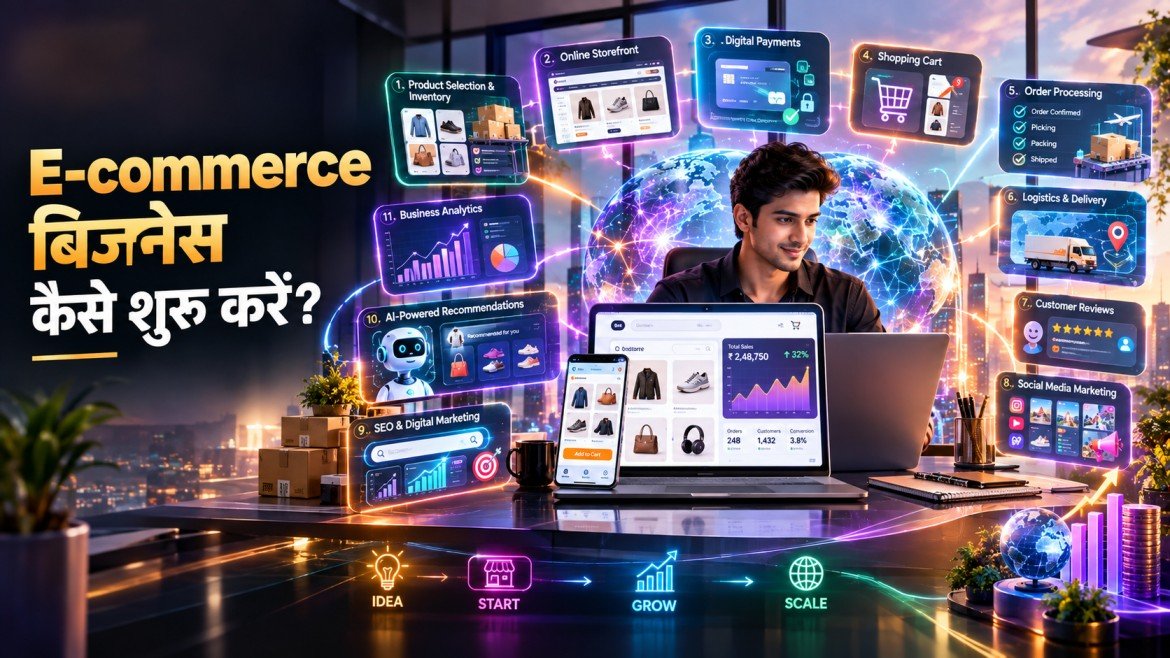
एक सफल online business के लिए product selection, target audience, pricing, website, payment system, delivery, customer service, marketing और analytics—इन सभी को सही तरीके से manage करना पड़ता है।
इस विस्तृत guide में हम समझेंगे कि E-commerce बिजनेस कैसे शुरू करें, शुरुआत में किन चीजों की आवश्यकता होगी, कौन-से business models उपलब्ध हैं, customers कैसे लाएं, किन challenges का सामना करना पड़ सकता है और आने वाले समय में इस industry का future क्या हो सकता है।
Table of Contents
E-commerce क्या है?
सरल शब्दों में, E-commerce का अर्थ internet के माध्यम से products या services की खरीद-बिक्री करना है।
इसमें customer किसी website, mobile application या online marketplace पर product देखता है, उसकी जानकारी पढ़ता है, order करता है और digital या अन्य उपलब्ध payment method से भुगतान करता है।
उदाहरण के लिए:
- कपड़ों की online दुकान
- मोबाइल accessories store
- Grocery website
- Handmade products business
- Beauty products store
- Furniture marketplace
- Digital courses platform
- Subscription-based products
- Customized gifts store
इन सभी को online commerce के अलग-अलग रूपों के रूप में समझा जा सकता है।
E-commerce बिजनेस शुरू करने से पहले क्या सोचें?
किसी भी online business को शुरू करने से पहले केवल यह सोचना पर्याप्त नहीं है कि “मैं क्या बेच सकता हूं?”
आपको यह समझना होगा कि:
- कौन आपका customer है?
- वह क्या खरीदना चाहता है?
- उसकी समस्या क्या है?
- बाजार में competition कितना है?
- आपका product दूसरों से अलग क्यों है?
- आपका expected profit margin कितना है?
- delivery cost कितनी होगी?
- customer आपको क्यों चुनेगा?
इन सवालों के जवाब आपकी business strategy का आधार बनेंगे।
Step 1: सही Product या Niche चुनें
E-commerce की शुरुआत के लिए सबसे महत्वपूर्ण निर्णय product या niche का चुनाव है।
ऐसा product चुनने का प्रयास करें जिसकी वास्तविक demand हो और जिसे आप consistently source या manufacture कर सकें।
Product चुनते समय इन बातों पर ध्यान दें
1. Demand
क्या लोग इस product को खरीदना चाहते हैं?
2. Competition
क्या बहुत सारे established sellers पहले से मौजूद हैं?
3. Profit Margin
Product की खरीद या manufacturing cost और selling price के बीच पर्याप्त margin होना चाहिए।
4. Shipping
क्या product आसानी से और सुरक्षित रूप से ship किया जा सकता है?
5. Repeat Purchase
क्या customer भविष्य में दोबारा खरीद सकता है?
उदाहरण के लिए cosmetics, personal-care products और कुछ household products में repeat purchases की संभावना हो सकती है।
Step 2: Target Customer को समझें
अच्छा product होना जरूरी है, लेकिन यह समझना भी जरूरी है कि उसे कौन खरीदेगा।
अपने ideal customer का profile तैयार करें।
इसमें शामिल हो सकते हैं:
- Age
- Location
- Income range
- Occupation
- Interests
- Buying behavior
- Common problems
- Preferred price range
मान लीजिए आप eco-friendly home products बेचते हैं। आपका target audience environmentally conscious consumers, young professionals और ऐसे households हो सकते हैं जो sustainable alternatives तलाश रहे हैं।
Customer की जरूरत समझने से product positioning और marketing दोनों बेहतर हो सकते हैं।
Step 3: Business Model चुनें
हर E-commerce business का operating model एक जैसा नहीं होता।
आप इनमें से किसी model पर काम कर सकते हैं:
Inventory-Based Model
आप products खरीदकर या manufacture करके अपने पास stock रखते हैं।
फायदे:
- Product quality पर अधिक control
- Faster dispatch संभव
- Branding पर बेहतर control
चुनौतियां:
- Initial investment अधिक हो सकता है
- Unsold inventory का risk रहता है
Dropshipping Model
इस model में seller के पास सामान्यतः inventory नहीं होती। Order मिलने के बाद supplier product customer तक भेजता है।
फायदे:
- कम initial inventory investment
- कई products test किए जा सकते हैं
चुनौतियां:
- Product quality पर सीमित control
- Delivery time प्रभावित हो सकता है
- Supplier dependency अधिक होती है
Marketplace Model
आप Amazon, Flipkart या किसी अन्य marketplace पर अपने products बेच सकते हैं।
यह शुरुआत के लिए customer acquisition में मदद कर सकता है, लेकिन marketplace fees और platform rules को समझना आवश्यक है।
Direct-to-Consumer Model
आप अपना brand और online store बनाकर सीधे customers को बेचते हैं।
इस model में brand identity, customer relationship और first-party customer data पर अधिक control मिल सकता है।
Step 4: Business Name और Brand Identity बनाएं
एक memorable brand name customer को आपके business को याद रखने में मदद करता है।
नाम चुनते समय:
- आसान spelling रखें।
- याद रखने में सरल हो।
- Product category से बहुत अधिक सीमित न हो, यदि future में expansion करना चाहते हैं।
- Domain availability check करें।
- Social media username availability भी देखें।
इसके बाद logo, color palette, packaging और brand voice तैयार करें।
एक consistent identity आपके business को professional appearance देती है।
Step 5: Website या Online Store बनाएं
आज E-commerce website बनाना पहले की तुलना में आसान हो गया है।
आप Shopify, WooCommerce या अन्य commerce platforms का उपयोग कर सकते हैं।
एक अच्छी online store में होना चाहिए:
- Simple navigation
- Mobile-friendly design
- Clear product categories
- High-quality product images
- Detailed descriptions
- Product pricing
- Customer reviews
- Secure checkout
- Contact information
- Return and refund information
Product Page कैसी होनी चाहिए?
एक अच्छी product page customer के प्रमुख सवालों का जवाब देनी चाहिए।
इसमें शामिल करें:
- Product name
- Clear images
- Price
- Product benefits
- Features
- Size or specifications
- Available variants
- Delivery information
- Return policy
- FAQs
- Reviews
Customer को जितनी अधिक relevant information मिलेगी, purchasing decision उतना आसान हो सकता है।
Step 6: Payment System सेट करें
Online customers के लिए convenient payment options महत्वपूर्ण हैं।
आप अपने business और target audience के अनुसार उपलब्ध payment solutions चुन सकते हैं।
संभावित options में शामिल हैं:
- UPI
- Debit/Credit Cards
- Net Banking
- Digital Wallets
- Cash on Delivery
- Payment Gateway
Payment process simple और secure रखें।
Checkout के दौरान unnecessary steps कम करना भी महत्वपूर्ण है क्योंकि complicated checkout cart abandonment बढ़ा सकता है।
Step 7: Delivery और Logistics की योजना बनाएं
Online selling में order लेना केवल पहला हिस्सा है।
Customer तक product सुरक्षित और समय पर पहुंचाना भी उतना ही महत्वपूर्ण है।
आपको तय करना होगा:
- कौन delivery करेगा?
- Shipping charges कितने होंगे?
- Free shipping की सीमा क्या होगी?
- Return कैसे process होगा?
- Damaged product का क्या होगा?
- Delivery कितने दिनों में होगी?
शुरुआत में अलग-अलग logistics providers की service quality, pricing और coverage की तुलना करना उपयोगी हो सकता है।
Step 8: Pricing Strategy बनाएं
Pricing केवल product cost देखकर तय नहीं करनी चाहिए।
एक basic calculation में शामिल हो सकते हैं:
Product Cost + Packaging + Shipping + Payment Fees + Marketing Cost + Other Expenses = Total Cost
इसके बाद desired profit margin को ध्यान में रखकर selling price निर्धारित करें।
उदाहरण:
अगर product की total landed cost ₹500 है और आपका desired gross margin ₹250 है, तो basic selling price ₹750 के आसपास हो सकती है। लेकिन taxes, discounts, marketplace fees और promotional expenses को भी calculation में शामिल करना चाहिए।
Step 9: Digital Marketing शुरू करें
एक नया E-commerce store अपने आप customers नहीं लाता।
आपको traffic और awareness बनाने के लिए digital marketing strategy विकसित करनी होगी।
Search Engine Optimization
SEO के माध्यम से product और category pages को search engines के लिए optimize किया जा सकता है।
Focus करें:
- Product keywords
- Category keywords
- Helpful blog content
- Internal links
- Product descriptions
- Image ALT text
- Page speed
- Mobile experience
Social Media Marketing
Instagram, Facebook, YouTube और अन्य relevant platforms पर product-related content बनाया जा सकता है।
Content ideas:
- Product demonstrations
- Tutorials
- Customer reviews
- Before-and-after content
- Behind-the-scenes videos
- Educational posts
- Short-form videos
Paid Advertising
Google Ads और social media advertising targeted customers तक पहुंचने में मदद कर सकते हैं।
लेकिन advertising शुरू करने से पहले budget, conversion tracking और customer acquisition cost समझना जरूरी है।
Step 10: Customer Reviews और Trust बनाएं
Online customer product को physically देख नहीं सकता। इसलिए trust बहुत महत्वपूर्ण है।
आप trust बनाने के लिए:
- Genuine reviews दिखाएं।
- Clear return policy रखें।
- Accurate product information दें।
- Customer questions का जवाब दें।
- Secure payment options रखें।
- Contact details clearly display करें।
- Delivery expectations स्पष्ट रखें।
Fake reviews या misleading product claims short-term में फायदा दे सकते हैं, लेकिन long-term brand reputation को नुकसान पहुंचा सकते हैं।
E-commerce में Customer Service क्यों जरूरी है?
एक सफल E-commerce brand केवल products नहीं बेचता; वह customer experience भी बेचता है।
Customer को order से पहले और बाद में सहायता की आवश्यकता हो सकती है।
Common questions:
- मेरा order कब पहुंचेगा?
- क्या product exchange हो सकता है?
- Return कैसे करें?
- Product का सही size कौन-सा है?
- क्या यह product available है?
Fast और professional customer support customer satisfaction और repeat purchases को प्रभावित कर सकता है।
E-commerce बिजनेस में Analytics का उपयोग
आपको यह समझना जरूरी है कि customers आपकी website पर क्या कर रहे हैं।
Analytics से आप देख सकते हैं:
- कितने visitors आए?
- कितने लोगों ने product देखा?
- कितने लोगों ने cart में product जोड़ा?
- कितने लोगों ने purchase किया?
- कौन-से products ज्यादा बिक रहे हैं?
- कौन-सा marketing channel बेहतर perform कर रहा है?
कुछ महत्वपूर्ण metrics हैं:
Conversion Rate = Orders ÷ Website Visitors × 100
इसके अलावा Average Order Value, Customer Acquisition Cost और Customer Lifetime Value जैसे metrics भी उपयोगी हो सकते हैं।
E-commerce में AI का बढ़ता उपयोग
Artificial Intelligence online businesses के operations को तेजी से बदल रहा है।
AI का उपयोग किया जा सकता है:
- Product descriptions लिखने में
- Customer support automation में
- Product recommendations में
- Demand forecasting में
- Marketing content creation में
- Customer segmentation में
- Inventory planning में
- Fraud detection में
उदाहरण के लिए, AI customer के browsing और purchase behavior का analysis करके relevant products recommend करने में सहायता कर सकता है।
लेकिन customer data और AI tools का उपयोग करते समय privacy, security और applicable regulations का ध्यान रखना जरूरी है।
E-commerce बिजनेस की प्रमुख चुनौतियां
हर E-commerce entrepreneur को कुछ common challenges का सामना करना पड़ सकता है।
High Competition
Online market में customers के पास बहुत सारे विकल्प हैं।
इसलिए केवल कम price रखना पर्याप्त नहीं है।
आपको differentiation पर काम करना होगा।
Customer Acquisition Cost
Paid advertising के कारण customer प्राप्त करने की लागत बढ़ सकती है।
इसलिए organic traffic, referrals, repeat customers और content marketing पर भी ध्यान देना उपयोगी है।
Returns और Refunds
Returns online retail का महत्वपूर्ण operational challenge हो सकता है।
Clear return policy और सही product information return rate को नियंत्रित करने में मदद कर सकते हैं।
Inventory Management
बहुत अधिक inventory capital को block कर सकती है, जबकि कम inventory के कारण products unavailable हो सकते हैं।
Demand forecasting और sales analysis इसमें सहायता कर सकते हैं।
E-commerce में भविष्य के अवसर
E-commerce का future केवल traditional online stores तक सीमित नहीं रहेगा।
कुछ महत्वपूर्ण opportunities हैं:
Social Commerce
Social platforms और shopping experiences का integration बढ़ सकता है।
AI-Powered Personalization
Customers को अधिक personalized product recommendations मिल सकती हैं।
Quick Commerce
कुछ categories में faster delivery customer expectations को प्रभावित करती रहेगी।
Voice और Conversational Commerce
Voice assistants और AI chat interfaces product discovery और customer support को बदल सकते हैं।
Sustainable Commerce
Customers environmentally responsible packaging और sustainable products में अधिक interest दिखा सकते हैं।
Cross-Border Selling
Digital infrastructure छोटे brands को international customers तक पहुंचने में मदद कर सकता है।
E-commerce और Digital Transformation
E-commerce broader digital transformation का एक महत्वपूर्ण हिस्सा है।
एक traditional business जब online store, digital payments, CRM, analytics, automation और AI को अपनाता है, तो उसकी operational structure बदलने लगता है।
उदाहरण के लिए:
Traditional Store → Online Store → Digital Marketing → Data Analytics → Automation → AI-Assisted Business
इस transformation का impact केवल sales पर नहीं पड़ता।
यह inventory management, customer service, marketing, finance और decision-making को भी प्रभावित कर सकता है।
शुरुआती Entrepreneurs के लिए Practical Tips
अगर आप पहली बार online business शुरू कर रहे हैं, तो शुरुआत में बहुत बड़ा investment करने के बजाय छोटे scale पर market validate करना समझदारी हो सकती है।
शुरुआत में:
- एक specific niche चुनें।
- Limited products से शुरुआत करें।
- Customer feedback लें।
- Product-market fit test करें।
- खर्चों को track करें।
- Marketing experiments करें।
- Analytics regularly देखें।
- धीरे-धीरे successful products का scale बढ़ाएं।
एक common mistake यह है कि entrepreneur शुरुआत में बहुत सारे products launch कर देता है लेकिन यह नहीं समझता कि customer वास्तव में क्या खरीदना चाहता है।
30-Day E-commerce Launch Plan
Week 1: Research
- Niche चुनें।
- Competitors research करें।
- Target customer define करें।
- Product suppliers identify करें।
- Pricing research करें।
Week 2: Brand और Store
- Business name तय करें।
- Domain खरीदें।
- Logo और basic branding तैयार करें।
- Store setup करें।
- Product pages बनाएं।
Week 3: Operations
- Payment gateway configure करें।
- Shipping partner चुनें।
- Return policy तैयार करें।
- Customer support process बनाएं।
- Analytics setup करें।
Week 4: Marketing
- Social media profiles बनाएं।
- Initial content publish करें।
- SEO optimization करें।
- Small advertising campaign test करें।
- Customer feedback collect करें।
E-commerce बिजनेस की सफलता का Formula
किसी online store की सफलता केवल website traffic पर निर्भर नहीं करती।
एक practical framework है:
Right Product + Right Audience + Trust + Good Customer Experience + Effective Marketing + Data + Consistency
यदि इनमें से कोई एक महत्वपूर्ण हिस्सा लगातार कमजोर रहता है, तो growth प्रभावित हो सकती है।
निष्कर्ष
E-commerce बिजनेस कैसे शुरू करें? इसका कोई एक universal answer नहीं है, क्योंकि हर product, customer segment और business model अलग होता है।
फिर भी एक मजबूत शुरुआत के लिए आपको सही niche चुनना, target audience समझना, reliable products source करना, professional online store बनाना, secure payments और logistics स्थापित करना तथा digital marketing पर ध्यान देना चाहिए।
आने वाले future में AI, automation, social commerce, personalization और analytics online business को और अधिक intelligent बना सकते हैं। इसका impact छोटे businesses से लेकर बड़े brands तक दिखाई दे सकता है।
लेकिन technology अकेले सफलता की guarantee नहीं देती।
एक sustainable E-commerce business के लिए customer trust, product quality, transparent policies, effective service और continuous learning equally important रहेंगे।
अगर आप शुरुआत करना चाहते हैं, तो सबसे अच्छा approach यह हो सकता है कि पहले छोटे स्तर पर अपना idea validate करें, वास्तविक customers से feedback लें और फिर data के आधार पर धीरे-धीरे scale करें।
सही planning और लगातार improvement के साथ E-commerce एक नए entrepreneur के लिए एक मजबूत digital business opportunity बन सकता है।