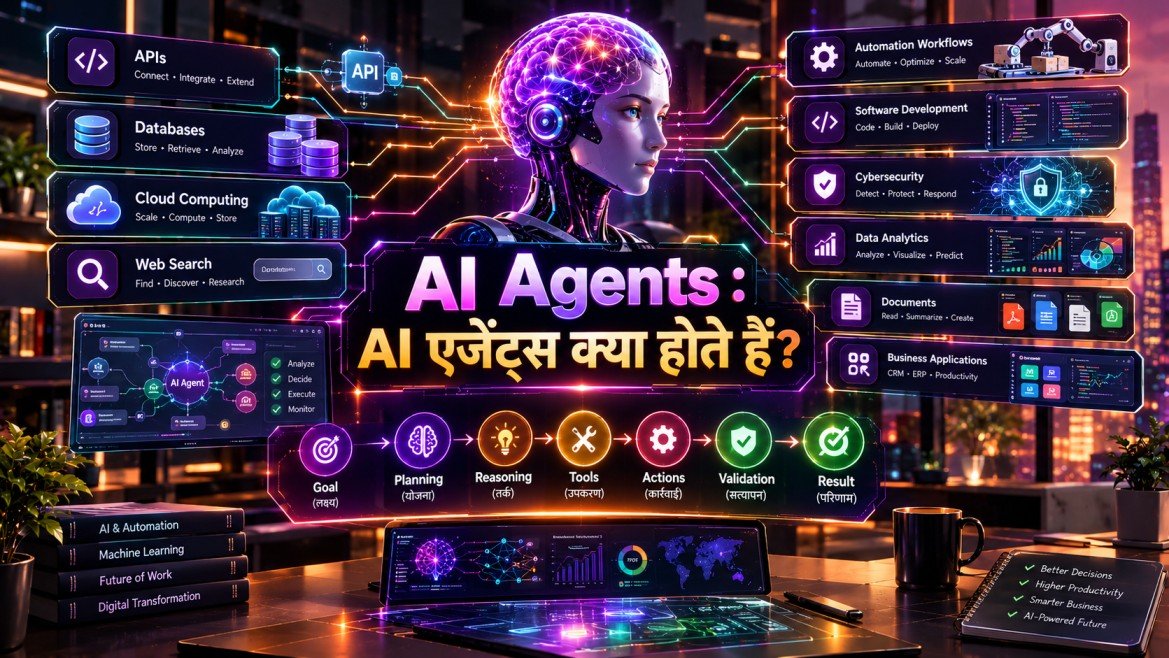
Artificial Intelligence यानी AI ने software और digital services की दुनिया को तेजी से बदल दिया है। पहले AI systems मुख्य रूप से सवालों के जवाब देने, data analyze करने या predefined instructions follow करने तक सीमित थे। अब technology का अगला चरण ऐसे intelligent systems की ओर बढ़ रहा है जो किसी goal को समझकर उसके लिए कई steps की planning और execution कर सकें।
यहीं से AI Agents की concept सामने आती है।
AI Agents ऐसे intelligent software systems हैं जो user या business द्वारा दिए गए objective को समझकर information collect कर सकते हैं, decisions के लिए reasoning कर सकते हैं, external tools का उपयोग कर सकते हैं और निर्धारित task को पूरा करने के लिए multiple actions execute कर सकते हैं।
उदाहरण के लिए, यदि कोई user केवल यह कहता है कि “मेरी अगले सप्ताह की business meeting की तैयारी करो”, तो एक advanced AI agent calendar, documents, emails और अन्य authorized tools के साथ काम करके meeting information organize करने, relevant documents summarize करने और preparation checklist बनाने जैसे कई tasks कर सकता है।
इस लेख में हम समझेंगे कि AI Agents क्या होते हैं, वे कैसे काम करते हैं, traditional AI और AI assistants से कैसे अलग हैं, इनके वास्तविक applications क्या हैं, इनके challenges क्या हैं और आने वाले वर्षों में इनका future कैसा हो सकता है।
Table of Contents
AI Agents क्या होते हैं?
सरल भाषा में, AI Agent एक ऐसा software system है जो किसी specific goal को पूरा करने के लिए environment से information लेता है, उसका analysis करता है, actions तय करता है और जरूरत के अनुसार tools का इस्तेमाल करता है।
Traditional software में instructions आमतौर पर पहले से निर्धारित होती हैं।
लेकिन AI Agents अधिक dynamic तरीके से काम कर सकते हैं।
एक सामान्य AI agent workflow इस तरह समझा जा सकता है:
Goal → Understand → Plan → Retrieve Information → Use Tools → Execute → Check Result → Continue or Finish
इसका अर्थ है कि agent केवल response generate नहीं करता, बल्कि task completion की दिशा में actions की एक श्रृंखला execute कर सकता है।
AI Agents कैसे काम करते हैं?
एक AI agent के architecture में कई components हो सकते हैं। हर system की architecture अलग हो सकती है, लेकिन सामान्यतः निम्न layers महत्वपूर्ण होती हैं।
1. Goal या Objective
सबसे पहले agent को एक objective मिलता है।
उदाहरण:
“मेरे लिए पिछले महीने की sales report तैयार करो।”
Agent को यह समझना होगा कि final output कैसा होना चाहिए।
2. Planning
इसके बाद system task को छोटे steps में divide कर सकता है।
उदाहरण:
- Sales database access करना
- पिछले महीने का data निकालना
- Data clean करना
- Sales categories बनाना
- Trends identify करना
- Report तैयार करना
- Final result validate करना
यही planning capability AI Agents को simple chatbot interaction से अलग बनाती है।
3. Memory
कुछ AI agents previous interactions या task-related information को memory के रूप में उपयोग कर सकते हैं।
Memory broadly दो प्रकार की हो सकती है:
Short-Term Memory
Current conversation या task की जानकारी।
Long-Term Memory
ऐसी information जिसे future interactions में उपयोग करने के लिए store किया गया हो, जहां architecture और permissions इसकी अनुमति दें।
उदाहरण के लिए, business agent किसी ongoing project की previous decisions को context में रख सकता है।
4. Tools का उपयोग
AI agent की एक महत्वपूर्ण capability external tools का उपयोग करना है।
उदाहरण:
- Web search
- Database
- Calculator
- API
- CRM
- Calendar
- Code execution environment
- Enterprise applications
मान लीजिए agent को किसी product की current inventory check करनी है। केवल language model से answer generate करने के बजाय agent authorized inventory API को call कर सकता है।
5. Reasoning और Decision Making
Agent task के दौरान उपलब्ध information का analysis करके अगला action निर्धारित कर सकता है।
उदाहरण:
यदि customer support agent को पता चलता है कि किसी order की delivery delayed है, तो वह:
- Order status check कर सकता है।
- Shipping information retrieve कर सकता है।
- Delay reason identify कर सकता है।
- Customer के लिए response तैयार कर सकता है।
- आवश्यकता होने पर human support team को escalate कर सकता है।
यह multi-step workflow AI Agents की practical usefulness को दर्शाता है।
AI Agents और Chatbots में अंतर
Chatbot सामान्यतः user के message का response देता है।
AI agent किसी broader objective को पूरा करने के लिए कई actions perform कर सकता है।
| Feature | Traditional Chatbot | AI Agent |
|---|---|---|
| Conversation | हाँ | हाँ |
| Goal-based workflow | सीमित | अधिक सक्षम |
| Tool usage | सीमित | व्यापक हो सकता है |
| Planning | सीमित | Multi-step |
| External systems | कुछ implementations में | सामान्य architecture का हिस्सा हो सकता है |
| Autonomous actions | सामान्यतः कम | अधिक |
| Validation | सीमित | Workflow का हिस्सा हो सकता है |
इसलिए हर chatbot को AI agent कहना सही नहीं है।
AI Agents और Generative AI में क्या अंतर है?
Generative AI मुख्य रूप से content generate करने की capability के लिए जाना जाता है।
यह text, code, images या अन्य outputs generate कर सकता है।
AI agent इसके ऊपर एक orchestration layer बना सकता है जो:
- Goal समझे
- Plan बनाए
- Tools select करे
- Actions execute करे
- Results evaluate करे
- आवश्यकता पड़ने पर अगला step चुने
इसलिए Generative AI को agent architecture के एक महत्वपूर्ण component के रूप में इस्तेमाल किया जा सकता है, लेकिन दोनों concepts समान नहीं हैं।
AI Agents के प्रमुख प्रकार
हर AI agent का purpose अलग हो सकता है।
1. Personal AI Agents
इनका उद्देश्य individual users के tasks में सहायता करना है।
उदाहरण:
- Schedule management
- Travel planning
- Research
- Personal productivity
- Document organization
2. Customer Service Agents
Businesses customer queries handle करने के लिए AI-powered agents का उपयोग कर सकते हैं।
ये agents:
- Customer information retrieve कर सकते हैं
- Order status check कर सकते हैं
- FAQs answer कर सकते हैं
- Support tickets create कर सकते हैं
- Complex cases human agents को transfer कर सकते हैं
3. Coding Agents
Coding agents software development workflows में सहायता कर सकते हैं।
संभावित tasks:
- Code generation
- Bug investigation
- Test generation
- Documentation
- Refactoring
- Code analysis
हालांकि generated code को production deployment से पहले human review और automated testing से validate करना आवश्यक है।
4. Research Agents
Research-oriented agents विभिन्न sources से information collect करके उसे organize और summarize करने में सहायता कर सकते हैं।
इनका उपयोग:
- Market research
- Competitive analysis
- Literature review
- Product research
- Business intelligence
जैसे tasks में किया जा सकता है।
5. Enterprise AI Agents
Enterprise environments में agents CRM, ERP, databases, ticketing systems और internal knowledge bases के साथ integrate किए जा सकते हैं।
उदाहरण:
एक sales agent customer history, previous interactions और product information देखकर sales representative के लिए account summary तैयार कर सकता है।
AI Agents के Real-World Applications
Healthcare
Healthcare में AI agents का उपयोग administrative और information-management tasks में किया जा सकता है।
उदाहरण:
- Appointment coordination
- Patient document organization
- Administrative queries
- Medical information retrieval
High-stakes medical decisions में appropriate professional oversight आवश्यक है।
Banking और Finance
Financial institutions में agents का उपयोग:
- Customer support
- Transaction information retrieval
- Fraud investigation assistance
- Document processing
- Internal knowledge search
के लिए किया जा सकता है।
Insurance
Insurance industry में AI agents कई repetitive workflows को support कर सकते हैं।
उदाहरण:
Customer claim submit करता है।
Agent:
- Claim documents collect करता है।
- Required information identify करता है।
- Policy information retrieve करता है।
- Missing information detect करता है।
- Claim workflow को appropriate system में आगे बढ़ाने में सहायता करता है।
- Complex case को human claims professional तक भेज सकता है।
इस प्रकार AI Agents insurance operations में workflow automation और decision support को सक्षम कर सकते हैं।
Software Testing में AI Agents
Software Quality Engineering में भी AI agents के संभावित applications बढ़ रहे हैं।
एक testing agent:
- Requirements analyze कर सकता है
- Test scenarios suggest कर सकता है
- Test cases generate कर सकता है
- API workflows execute कर सकता है
- Test results analyze कर सकता है
- संभावित defects identify कर सकता है
- Regression testing prioritize कर सकता है
लेकिन testing agent के output को बिना validation के accept करना उचित नहीं है।
QA professionals को test coverage, correctness, false positives, false negatives और business requirements के against results verify करने चाहिए।
AI Agents के फायदे
1. Automation
Repetitive multi-step workflows को automate करने की संभावना बढ़ती है।
2. Productivity
Professionals administrative और repetitive activities में कम समय लगाकर high-value work पर ध्यान दे सकते हैं।
3. Faster Information Retrieval
Agents multiple authorized information sources को access करके relevant data collect कर सकते हैं।
4. Personalization
User context और available data के आधार पर workflows अधिक personalized हो सकते हैं।
5. Continuous Assistance
कुछ implementations में agents background workflows या event-driven tasks को monitor कर सकते हैं।
AI Agents की प्रमुख Challenges
AI agents powerful होने के साथ कई technical और business challenges भी लेकर आते हैं।
1. Hallucination
Language models गलत या fabricated information generate कर सकते हैं।
यदि agent उस information के आधार पर कोई action execute करता है, तो उसका impact अधिक गंभीर हो सकता है।
2. गलत Tool Usage
यदि agent गलत API, database या business system को call करता है, तो unexpected परिणाम हो सकते हैं।
इसलिए permissions और tool boundaries महत्वपूर्ण हैं।
3. Security Risks
AI agent को external systems access देने से attack surface बढ़ सकता है।
Security considerations में शामिल हैं:
- Authentication
- Authorization
- Data isolation
- Prompt injection protection
- API security
- Audit logging
4. Excessive Autonomy
हर task को completely autonomous बनाना उचित नहीं है।
High-impact actions के लिए human approval आवश्यक हो सकता है।
उदाहरण:
- Financial transactions
- Production deployments
- Sensitive data changes
- Legal decisions
- Customer account modifications
5. Observability
यदि agent कई steps execute करता है, तो यह समझना आवश्यक है कि उसने कौन-सा decision क्यों लिया।
इसलिए logs, traces और audit trails महत्वपूर्ण होते हैं।
AI Agents में Human-in-the-Loop क्यों जरूरी है?
AI agents को पूरी autonomy देने के बजाय risk-based human oversight अपनाना अधिक practical approach हो सकता है।
Low-Risk Task
Agent स्वयं task पूरा कर सकता है।
उदाहरण:
- Document summarization
- Internal information search
- Draft generation
Medium-Risk Task
Agent action execute करे लेकिन review उपलब्ध हो।
High-Risk Task
Agent केवल recommendation दे और final action human approve करे।
यह approach automation और human control के बीच संतुलन बना सकती है।
AI Agents और Digital Transformation
Digital Transformation का अगला चरण केवल applications को cloud में migrate करने तक सीमित नहीं रहेगा।
Organizations increasingly ऐसे intelligent workflows विकसित कर सकती हैं जहां AI agents business applications, databases, APIs और human teams के बीच orchestration layer की तरह काम करें।
उदाहरण:
Customer Request → AI Agent → Knowledge Base → Business API → Validation → Human Approval → Final Action
इस architecture से organizations repetitive workflows को redesign कर सकती हैं।
AI Agents बनाने के लिए कौन-सी Technologies जरूरी हैं?
AI agent development एक single technology पर आधारित नहीं है।
इसके ecosystem में कई technologies शामिल हो सकती हैं।
Core Components
- Large Language Models
- Python या अन्य programming languages
- APIs
- Databases
- Vector databases
- Retrieval-Augmented Generation
- Tool calling
- Workflow orchestration
- Authentication
- Observability
- Evaluation frameworks
Developers को केवल prompt engineering नहीं बल्कि software architecture, security और data handling की भी समझ होनी चाहिए।
AI Agents के लिए RAG की भूमिका
Retrieval-Augmented Generation यानी RAG AI system को external knowledge sources से relevant information retrieve करने में मदद करता है।
उदाहरण:
किसी company के internal policy documents को knowledge base में रखा गया है।
User पूछता है:
“Company की remote-work policy क्या है?”
Agent relevant document retrieve करके उस information के आधार पर answer दे सकता है।
RAG के साथ AI Agents enterprise knowledge systems के साथ अधिक useful interaction कर सकते हैं।
AI Agents की Testing कैसे करें?
AI agent testing traditional software testing से कुछ अलग हो सकती है क्योंकि agent का behavior हमेशा पूरी तरह deterministic नहीं होता।
Testing में निम्न aspects शामिल किए जा सकते हैं:
Functional Testing
क्या agent requested task सही तरीके से पूरा करता है?
Tool Testing
क्या agent सही tool और सही parameters का उपयोग करता है?
Security Testing
क्या unauthorized actions को रोकता है?
Prompt Injection Testing
क्या malicious instructions agent के behavior को manipulate कर सकती हैं?
Reliability Testing
क्या repeated runs में acceptable results मिलते हैं?
Performance Testing
क्या agent expected response time में workflow पूरा करता है?
Human Oversight Testing
क्या high-risk actions पर सही approval mechanism trigger होता है?
AI Agents के लिए Evaluation Metrics
Agent quality को केवल “answer सही है या गलत” से measure करना पर्याप्त नहीं हो सकता।
कुछ useful metrics:
- Task completion rate
- Tool-call accuracy
- Response accuracy
- Hallucination rate
- Failure recovery rate
- Latency
- Cost per task
- Human escalation rate
- Security violation rate
इससे organizations agent performance को measurable तरीके से evaluate कर सकती हैं।
AI Agents से Career Opportunities
AI agents के development और deployment से नए career paths विकसित हो सकते हैं।
संभावित roles
- AI Engineer
- AI Agent Developer
- Machine Learning Engineer
- AI Automation Engineer
- AI QA Engineer
- AI Test Engineer
- Prompt Engineer
- AI Security Engineer
- Data Engineer
- AI Product Manager
Software testers के लिए AI agent evaluation और autonomous workflow testing एक emerging specialization बन सकता है।
AI Agents सीखने के लिए Roadmap
अगर आप इस field में career बनाना चाहते हैं, तो step-by-step approach अपनाएं।
Step 1: Programming
Python और basic software development concepts सीखें।
Step 2: AI Fundamentals
Machine Learning और Generative AI की basic concepts समझें।
Step 3: LLM Concepts
Prompts, tokens, context windows, embeddings और model limitations समझें।
Step 4: APIs और Tool Calling
External applications के साथ AI systems integrate करना सीखें।
Step 5: RAG
Documents और knowledge bases से information retrieval समझें।
Step 6: Agent Architecture
Planning, memory, tools, workflows और evaluation concepts सीखें।
Step 7: Build Projects
छोटे practical projects बनाएं, जैसे:
- Research assistant
- Customer-support agent
- Testing assistant
- Document-analysis agent
- Personal productivity agent
AI Agents का Future
आने वाले वर्षों में AI agents केवल standalone chat interfaces तक सीमित नहीं रह सकते।
वे enterprise applications के भीतर integrated workflows का हिस्सा बन सकते हैं।
संभावित future developments
Multi-Agent Systems
कई specialized agents एक complex task को मिलकर पूरा कर सकते हैं।
उदाहरण:
Research Agent + Data Agent + Coding Agent + Testing Agent
एक software project के अलग-अलग stages में collaborate कर सकते हैं।
More Autonomous Workflows
Future systems में agents अधिक complex workflows execute कर सकते हैं, लेकिन autonomy के साथ stronger security और governance की आवश्यकता भी बढ़ेगी।
Agent-to-Agent Collaboration
Specialized agents एक-दूसरे को tasks hand off कर सकते हैं।
उदाहरण:
एक customer-service agent complex technical issue को technical-support agent के पास भेज सकता है।
AI-Native Enterprises
कुछ organizations अपने workflows को शुरुआत से AI-first architecture के आधार पर design कर सकती हैं।
इससे traditional software applications के साथ intelligent orchestration layer विकसित हो सकती है।
AI Agents से जुड़ी Opportunities
Business perspective से agent technology कई नई opportunities create कर सकती है।
Business Opportunities
- AI automation consulting
- Enterprise AI integration
- AI testing services
- Customer-service automation
- Document processing
- Workflow automation
- Industry-specific AI solutions
- AI governance services
विशेष रूप से domain-specific agents महत्वपूर्ण हो सकते हैं।
उदाहरण के लिए generic AI agent के बजाय Insurance Claims Agent, Healthcare Administration Agent या Software Testing Agent जैसे specialized solutions अधिक targeted business value दे सकते हैं।
AI Agents अपनाने से पहले किन बातों का ध्यान रखें?
Organizations को implementation से पहले कुछ महत्वपूर्ण प्रश्न पूछने चाहिए:
- Agent को कौन-सा data access मिलेगा?
- कौन-कौन से tools उपलब्ध होंगे?
- कौन-से actions autonomous होंगे?
- कौन-से actions human approval मांगेंगे?
- Failure होने पर recovery कैसे होगी?
- सभी actions का audit trail उपलब्ध होगा?
- Security testing कैसे होगी?
- Performance और cost कैसे measure होंगे?
इन questions के जवाब agent deployment को अधिक controlled और reliable बनाने में मदद कर सकते हैं।
निष्कर्ष
AI Agents Artificial Intelligence के evolution में एक महत्वपूर्ण concept हैं। ये systems केवल answers generate करने के बजाय goals को समझकर planning, information retrieval, tool usage और multi-step execution में सहायता कर सकते हैं।
हालांकि AI agents की capabilities तेजी से विकसित हो रही हैं, लेकिन autonomy के साथ security, reliability, privacy, observability और human oversight की आवश्यकता भी बढ़ती है।
Future में AI Agents software development, testing, customer service, insurance, healthcare, finance और business automation जैसे क्षेत्रों में अधिक दिखाई दे सकते हैं।
इस technology को समझने का सबसे अच्छा तरीका केवल theory पढ़ना नहीं, बल्कि छोटे practical projects बनाकर यह समझना है कि AI model, tools, data, workflows और human oversight एक साथ कैसे काम करते हैं।