Introduction
कल्पना कीजिए कि आने वाले समय में आपका स्मार्टफोन केवल आपके सवालों के जवाब ही न दे, बल्कि आपके काम की योजना बनाए, ईमेल का जवाब तैयार करे, यात्रा की व्यवस्था समझे और आपकी जरूरत के अनुसार जानकारी खुद व्यवस्थित कर दे। यही वह दिशा है जहां Future of AI तेजी से आगे बढ़ रहा है।
Artificial Intelligence यानी AI अब केवल विज्ञान-कथा या बड़ी technology companies तक सीमित नहीं है। आज AI का उपयोग शिक्षा, healthcare, banking, insurance, software development, cybersecurity, digital marketing, manufacturing, transportation और entertainment जैसे क्षेत्रों में हो रहा है।
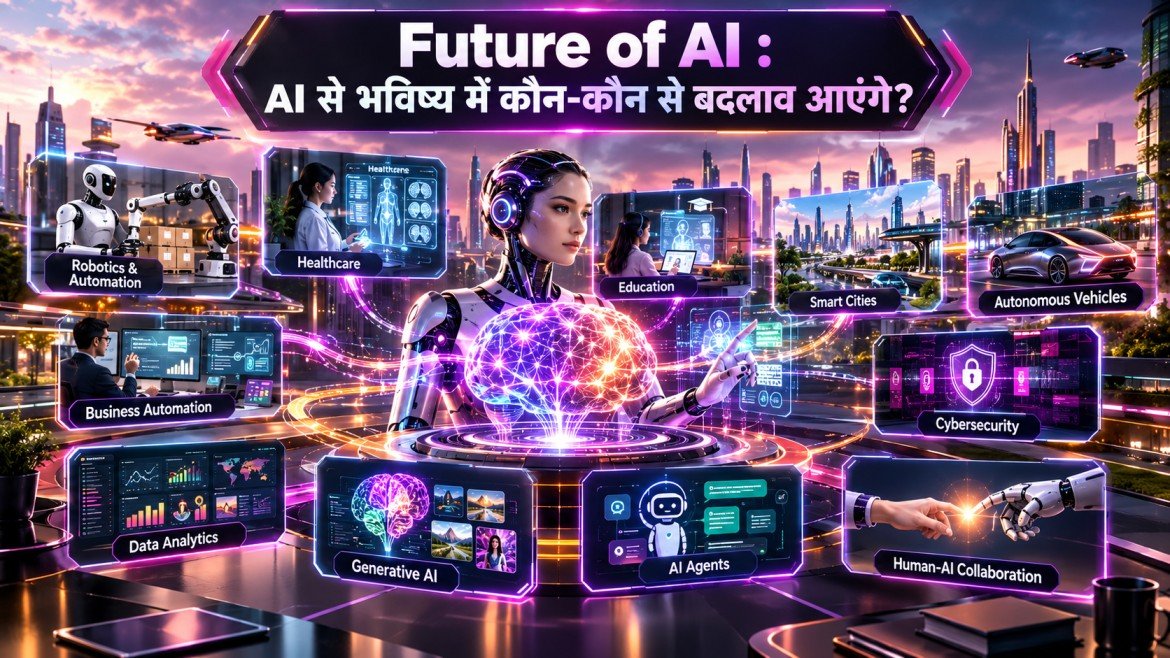
Future of AI केवल नए AI tools आने तक सीमित नहीं रहेगा। इसका प्रभाव इस बात पर भी पड़ेगा कि लोग काम कैसे करेंगे, कंपनियां customers से कैसे जुड़ेंगी, विद्यार्थी कैसे सीखेंगे और businesses किस तरह decisions लेंगे।
आने वाले वर्षों में AI और automation का combination productivity बढ़ा सकता है, repetitive tasks कम कर सकता है और नए प्रकार के digital services को जन्म दे सकता है। लेकिन इसके साथ privacy, cybersecurity, employment, misinformation और responsible AI जैसी चुनौतियां भी महत्वपूर्ण रहेंगी।
इसलिए Future of AI को समझना केवल technology professionals के लिए नहीं, बल्कि students, employees, entrepreneurs और सामान्य internet users के लिए भी उपयोगी है।
Table of Contents
Future of AI क्या है?
Future of AI से आशय उन संभावित technological developments और applications से है जिनके माध्यम से Artificial Intelligence आने वाले वर्षों में मानव जीवन और business processes को प्रभावित कर सकता है।
आज का AI मुख्य रूप से content generation, data analysis, recommendation, image recognition और conversational assistance जैसे कार्यों में इस्तेमाल होता है।
भविष्य में AI अधिक context-aware, multimodal, autonomous और personalized हो सकता है।
इसका अर्थ है कि AI केवल text को समझने तक सीमित नहीं रहेगा। वह text, image, audio, video, software code, documents और real-world data को एक साथ process करके अधिक complex tasks में सहायता कर सकता है।
Future of AI इतना महत्वपूर्ण क्यों है?
AI की तेजी से बढ़ती capabilities के पीछे कई महत्वपूर्ण factors हैं:
- बड़े datasets की उपलब्धता
- तेजी से विकसित होते AI models
- बेहतर computing infrastructure
- Cloud computing
- Generative AI
- Machine Learning
- Advanced chips और GPUs
- Automation platforms
- AI-powered software applications
इन technologies के combination से Future of AI का scope लगातार बढ़ रहा है।
उदाहरण के लिए, पहले किसी business analyst को बड़ी मात्रा में data manually analyze करना पड़ सकता था। अब AI tools data patterns identify करने, summaries बनाने और संभावित insights प्रस्तुत करने में सहायता कर सकते हैं।
हालांकि final business decision अभी भी context, human judgment और organizational requirements पर निर्भर करता है।
Future of AI में आने वाले प्रमुख बदलाव
1. AI Agents का विस्तार
AI का अगला बड़ा development केवल chatbot तक सीमित नहीं हो सकता। AI agents ऐसे systems हो सकते हैं जो किसी objective को समझकर कई steps को execute करने में सहायता करें।
उदाहरण के लिए एक AI agent:
- User की requirement समझ सकता है।
- Relevant information खोज सकता है।
- Data को analyze कर सकता है।
- एक action plan तैयार कर सकता है।
- आवश्यक software tools के साथ काम कर सकता है।
- Result को user के सामने प्रस्तुत कर सकता है।
यही evolution Future of AI को अधिक action-oriented बना सकता है।
उदाहरण
एक software testing team AI agent का उपयोग requirements analyze करने, संभावित test scenarios बनाने और regression testing के लिए test priorities सुझाने में कर सकती है।
Human tester फिर output को verify और refine कर सकता है।
2. Generative AI का विस्तार
Generative AI पहले ही content creation के तरीके को बदल रहा है।
AI अब text, images, audio, video, presentations और software code generate करने में सक्षम है।
Future of AI में generative systems अधिक context-aware और domain-specific हो सकते हैं।
Businesses अपने internal data और workflows के आधार पर specialized AI assistants विकसित कर सकते हैं।
संभावित उपयोग
- Marketing content
- Software code
- Product documentation
- Training material
- Customer support
- Business reports
- Design concepts
- Video production
- Data summaries
इसका मतलब यह नहीं है कि human creativity समाप्त हो जाएगी। इसके बजाय creative professionals AI को एक productivity tool के रूप में इस्तेमाल कर सकते हैं।
3. शिक्षा में बड़ा बदलाव
Education sector में AI personalized learning को बढ़ावा दे सकता है।
एक traditional classroom में सभी students को समान learning material मिलता है, जबकि AI individual learning patterns के आधार पर अलग-अलग explanations और exercises तैयार करने में सहायता कर सकता है।
Future of AI में AI tutor:
- कठिन concepts को सरल भाषा में समझा सकता है।
- Student की गलतियों की पहचान कर सकता है।
- Personalized practice questions बना सकता है।
- Learning progress का analysis कर सकता है।
- अलग-अलग learning styles के अनुसार content तैयार कर सकता है।
उदाहरण
यदि किसी student को mathematics के किसी particular concept में कठिनाई हो रही है, तो AI उसी concept को अलग उदाहरणों, diagrams और practice questions के माध्यम से समझाने में सहायता कर सकता है।
4. Healthcare में AI की भूमिका
Healthcare उन क्षेत्रों में से एक है जहां AI का potential काफी बड़ा है।
AI medical images, patient records और research data जैसे information sources का analysis करने में सहायता कर सकता है।
Future of AI में healthcare systems संभावित रूप से:
- Medical image analysis में सहायता कर सकते हैं।
- Patient data को summarize कर सकते हैं।
- Research information organize कर सकते हैं।
- Drug discovery research को accelerate कर सकते हैं।
- Administrative workloads कम कर सकते हैं।
- Personalized healthcare research को support कर सकते हैं।
हालांकि healthcare जैसे high-stakes क्षेत्र में AI output को qualified professionals द्वारा validate करना आवश्यक रहेगा।
AI को medical professional का automatic replacement मानना उचित नहीं होगा।
5. Software Development में परिवर्तन
Software development में AI coding assistants पहले से ही developers की productivity बढ़ाने में सहायता कर रहे हैं।
भविष्य में developers natural language में requirements describe करके initial code structures, tests, documentation और debugging suggestions प्राप्त कर सकते हैं।
Future of AI software engineering lifecycle के कई हिस्सों को प्रभावित कर सकता है:
- Requirement analysis
- Code generation
- Code review
- Test generation
- Bug analysis
- Documentation
- API development
- Database queries
- DevOps automation
लेकिन generated code को security, correctness, performance और maintainability के लिए human review की आवश्यकता रहेगी।
6. Software Testing और Quality Engineering
AI software testing के क्षेत्र में भी महत्वपूर्ण बदलाव ला सकता है।
AI requirements को analyze करके potential test scenarios identify करने, test cases generate करने और test data तैयार करने में सहायता कर सकता है।
AI Testing के संभावित उपयोग
- Functional test case generation
- API testing assistance
- SQL validation
- Regression test prioritization
- Defect classification
- Test-data generation
- Test documentation
- Exploratory testing assistance
Future of AI में quality engineering teams AI को testing lifecycle के विभिन्न stages में integrate कर सकती हैं।
उदाहरण के लिए, यदि application में login functionality है, तो AI positive, negative, boundary, security और usability scenarios का प्रारंभिक set तैयार कर सकता है।
लेकिन tester को actual business rules के आधार पर इन scenarios को verify और modify करना होगा।
7. Digital Marketing में AI का प्रभाव
Digital marketing में AI customer behavior, content creation, audience segmentation और campaign analysis को बदल रहा है।
Future of AI marketing teams को अधिक personalized customer experiences बनाने में सहायता कर सकता है।
AI का उपयोग किया जा सकता है:
- Content ideation
- Ad copy generation
- Audience segmentation
- Campaign analysis
- SEO research
- Customer behavior analysis
- Email personalization
- Recommendation systems
उदाहरण
एक e-commerce company customer की previous interactions और preferences के आधार पर relevant product recommendations प्रस्तुत कर सकती है।
लेकिन personalization के साथ privacy और consent महत्वपूर्ण बने रहेंगे।
8. Customer Service में AI बदलाव
Customer support में AI-powered conversational systems पहले से ही common होते जा रहे हैं।
भविष्य में AI customer queries को समझकर केवल predefined answers देने के बजाय context के आधार पर अधिक personalized assistance दे सकता है।
AI customer support में:
- Frequently asked questions handle कर सकता है।
- Tickets categorize कर सकता है।
- Customer conversations summarize कर सकता है।
- Support agents को suggested responses दे सकता है।
- Priority issues identify करने में सहायता कर सकता है।
Future of AI में human support agents और AI assistants का collaborative model अधिक महत्वपूर्ण हो सकता है।
9. Cybersecurity में AI
Cyber threats लगातार sophisticated हो रहे हैं। ऐसे में AI cybersecurity teams को large volumes of security data analyze करने में सहायता कर सकता है।
AI potential anomalies, unusual behavior और suspicious patterns identify करने में उपयोगी हो सकता है।
संभावित उपयोग
- Threat detection
- Log analysis
- Anomaly detection
- Phishing analysis
- Vulnerability prioritization
- Security monitoring
- Incident response assistance
लेकिन attackers भी AI का उपयोग कर सकते हैं। इसलिए Future of AI cybersecurity में defensive और offensive capabilities दोनों को प्रभावित कर सकता है।
इस कारण organizations को AI-powered security के साथ strong governance और human oversight की जरूरत होगी।
10. Business Decision-Making में बदलाव
AI business leaders को बड़ी मात्रा में information analyze करने में सहायता कर सकता है।
उदाहरण के लिए companies AI का उपयोग sales trends, customer behavior, operational data और market signals को analyze करने में कर सकती हैं।
Future of AI decision-support systems को अधिक intelligent बना सकता है।
लेकिन AI द्वारा दिया गया recommendation automatically सही नहीं माना जाना चाहिए।
Business context, risk, regulations और human judgment अभी भी महत्वपूर्ण factors होंगे।
11. रोजगार और Jobs पर प्रभाव
AI का employment पर प्रभाव सबसे अधिक चर्चा वाले विषयों में से एक है।
कुछ repetitive tasks automation के कारण कम हो सकते हैं, जबकि दूसरी ओर नए job roles भी विकसित हो सकते हैं।
संभावित roles में शामिल हैं:
- AI Engineer
- AI Product Manager
- AI Quality Engineer
- AI Test Engineer
- Data Analyst
- Machine Learning Engineer
- AI Governance Specialist
- AI Security Specialist
- Prompt Engineer
- AI Solutions Consultant
Future of AI में कई existing jobs का nature बदल सकता है।
इसलिए professionals के लिए continuous learning महत्वपूर्ण होगा।
12. Human + AI Collaboration
AI को केवल human replacement के रूप में देखने के बजाय human-AI collaboration को समझना अधिक उपयोगी है।
AI repetitive और data-intensive activities संभाल सकता है, जबकि humans:
- Critical thinking
- Creativity
- Empathy
- Strategic planning
- Ethical judgment
- Complex decision-making
जैसे क्षेत्रों में महत्वपूर्ण भूमिका निभा सकते हैं।
Future of AI का एक महत्वपूर्ण हिस्सा यही collaboration हो सकता है।
13. AI और Robotics
AI और robotics के combination से physical-world automation में भी बदलाव आ सकता है।
Manufacturing, warehouses, agriculture और logistics में intelligent robots अधिक adaptive हो सकते हैं।
उदाहरण के लिए warehouse robots inventory movement, sorting और transportation जैसे tasks में सहायता कर सकते हैं।
Future में AI-powered robots changing environments के आधार पर अपने actions को adjust करने में अधिक सक्षम हो सकते हैं।
14. Smart Homes और Personal AI Assistants
Future में personal AI assistants केवल voice commands तक सीमित नहीं रह सकते।
वे user preferences और routines के आधार पर अधिक personalized assistance दे सकते हैं।
संभावित applications:
- Smart home management
- Calendar organization
- Travel planning
- Personal productivity
- Shopping assistance
- Learning support
- Information management
हालांकि ऐसे systems के लिए data privacy और security अत्यंत महत्वपूर्ण होंगे।
15. AI और Digital Transformation
AI digital transformation की एक महत्वपूर्ण technology बन चुका है।
Digital transformation का उद्देश्य केवल existing processes को computerize करना नहीं है। इसका उद्देश्य technology के माध्यम से business processes, customer experience और decision-making को बेहतर बनाना भी है।
Future of AI organizations को intelligent automation की दिशा में आगे ले जा सकता है।
Companies AI को integrate कर सकती हैं:
- CRM systems
- ERP platforms
- Customer support
- Analytics
- Software development
- Marketing
- Finance
- Supply chain
इस transformation का impact organization की technology readiness, data quality और employee skills पर निर्भर करेगा।
Future of AI में Multimodal AI की भूमिका
Multimodal AI अलग-अलग प्रकार के data को एक साथ समझने और process करने की दिशा में विकसित हो रहा है।
उदाहरण के लिए एक AI system text, image और audio inputs को combine करके response तैयार कर सकता है।
यह capability कई industries में उपयोगी हो सकती है।
संभावित applications
- Visual inspection
- Medical research
- Education
- Customer support
- Content creation
- Accessibility
- Manufacturing
Future of AI में multimodal systems अधिक natural human-computer interaction को support कर सकते हैं।
AI के Future में Personalization
Personalization future digital experiences का महत्वपूर्ण हिस्सा हो सकता है।
AI users की preferences और behavior patterns को analyze करके customized recommendations देने में सहायता कर सकता है।
उदाहरण:
एक online learning platform student के performance data के आधार पर अगले learning modules recommend कर सकता है।
एक shopping platform customer के interests के आधार पर relevant products दिखा सकता है।
लेकिन personalization और privacy के बीच संतुलन आवश्यक होगा।
Future of AI की प्रमुख चुनौतियां
AI की growth के साथ कई challenges भी सामने आएंगे।
1. Data Privacy
AI systems को बड़े datasets की आवश्यकता हो सकती है। इसलिए personal और sensitive information की security महत्वपूर्ण होगी।
2. AI Bias
यदि training data biased है, तो AI output में भी bias दिखाई दे सकता है।
3. गलत जानकारी
Generative AI कभी-कभी convincing लेकिन incorrect information produce कर सकता है।
4. Cybersecurity Risks
AI-powered systems नए security vulnerabilities पैदा कर सकते हैं।
5. Job Displacement
कुछ repetitive tasks automation के कारण कम हो सकते हैं, जिससे workforce को reskilling की आवश्यकता पड़ सकती है।
6. Regulation
Governments और organizations को AI के responsible use के लिए appropriate regulatory frameworks विकसित करने होंगे।
7. Human Overdependence
यदि लोग AI output को बिना verification के स्वीकार करने लगें, तो गलत decisions का risk बढ़ सकता है।
Future of AI के लिए आवश्यक Skills
AI के दौर में केवल AI tool चलाना पर्याप्त नहीं होगा।
Professionals को technical और human skills का combination विकसित करना चाहिए।
Technical Skills
- AI fundamentals
- Data analysis
- Machine Learning basics
- Prompt engineering
- Automation
- Cybersecurity awareness
- Cloud technologies
Human Skills
- Critical thinking
- Communication
- Creativity
- Problem-solving
- Domain expertise
- Analytical thinking
- Ethical decision-making
Future of AI में hybrid skills रखने वाले professionals विभिन्न industries में नई opportunities तलाश सकते हैं।
Students के लिए Future of AI का क्या मतलब है?
Students को AI से डरने के बजाय इसे learning assistant की तरह समझना चाहिए।
AI का उपयोग किया जा सकता है:
- Difficult concepts समझने के लिए
- Practice questions बनाने के लिए
- Programming सीखने के लिए
- Writing improve करने के लिए
- Research topics explore करने के लिए
- Interview preparation के लिए
- New skills सीखने के लिए
लेकिन students को AI-generated information को independently verify करने की आदत भी विकसित करनी चाहिए।
Businesses के लिए Opportunities
Businesses के लिए AI कई नए opportunities पैदा कर सकता है।
Productivity
Repetitive tasks automate करके employees अधिक valuable activities पर focus कर सकते हैं।
Customer Experience
AI personalized interactions को support कर सकता है।
Cost Optimization
Automation operational processes को अधिक efficient बनाने में सहायता कर सकता है।
Innovation
AI नए products, services और business models बनाने में सहायता कर सकता है।
Data-Driven Decisions
AI large datasets से patterns और insights identify करने में सहायता कर सकता है।
Future of AI और Small Businesses
AI केवल बड़ी companies के लिए नहीं है।
Small businesses भी affordable AI tools के माध्यम से:
- Content creation
- Customer support
- Marketing
- Data analysis
- Appointment management
- Lead generation
- Business documentation
जैसे tasks में productivity बढ़ा सकते हैं।
उदाहरण के लिए एक छोटा digital marketing agency AI की सहायता से content research, campaign ideas और reporting को streamline कर सकता है।
Future Trends of AI
आने वाले वर्षों में निम्न trends महत्वपूर्ण हो सकते हैं:
Agentic AI
AI systems increasingly multi-step tasks execute करने की दिशा में विकसित हो सकते हैं।
AI-Native Applications
कुछ applications शुरुआत से ही AI-first architecture के आधार पर बनाई जा सकती हैं।
Multimodal AI
Text, image, audio और video को एक साथ process करने वाले systems का उपयोग बढ़ सकता है।
Edge AI
कुछ AI processing devices के करीब होने से latency और privacy requirements को address करने में सहायता मिल सकती है।
AI Governance
Organizations को responsible AI policies, monitoring और audit processes की जरूरत बढ़ सकती है।
AI Security
AI models और AI-powered applications की security एक specialized discipline बन सकती है।
क्या AI इंसानों की जगह लेगा?
यह सवाल Future of AI पर चर्चा में अक्सर पूछा जाता है।
इसका simple answer यह नहीं है कि हर job AI से replace हो जाएगी।
AI का प्रभाव अलग-अलग occupations और tasks पर अलग हो सकता है।
कुछ repetitive activities automation के लिए अधिक suitable हो सकती हैं, जबकि jobs जिनमें human interaction, creativity, leadership, physical adaptability और complex judgment शामिल है, उनका nature अलग तरीके से बदल सकता है।
इसलिए professionals के लिए सबसे practical approach continuous learning और AI-assisted productivity को समझना है।
AI को Responsible तरीके से कैसे अपनाएं?
AI adoption के लिए organizations को केवल technology खरीदने पर focus नहीं करना चाहिए।
एक responsible AI strategy में शामिल हो सकते हैं:
- Clear AI policies
- Data protection
- Human oversight
- Output validation
- Security testing
- Employee training
- Risk assessment
- Compliance monitoring
- AI performance evaluation
Future of AI तभी sustainable होगा जब innovation के साथ responsibility भी विकसित हो।
Future of AI: एक Practical Example
मान लीजिए एक insurance company claims process को improve करना चाहती है।
AI system claim documents को analyze करके relevant information extract कर सकता है।
इसके बाद system claim को predefined criteria के आधार पर categorize करने में सहायता कर सकता है।
Human claims professional complex cases की review कर सकता है।
इस workflow में AI repetitive information processing को accelerate करता है, जबकि human expert business rules, customer circumstances और final decision-making में भूमिका निभाता है।
यह human-AI collaboration का एक practical example है।
Future of AI से हमें क्या सीखना चाहिए?
AI का future केवल technology companies द्वारा निर्धारित नहीं होगा। इसका प्रभाव businesses, employees, educators, governments और consumers के decisions पर भी निर्भर करेगा।
कुछ महत्वपूर्ण lessons हैं:
- AI literacy increasingly important होगी।
- Continuous learning आवश्यक होगा।
- Human judgment महत्वपूर्ण रहेगा।
- Data privacy को प्राथमिकता देनी होगी।
- AI outputs को verify करना जरूरी होगा।
- Creativity और domain expertise की value बनी रहेगी।
- Responsible AI adoption long-term success के लिए आवश्यक होगा।
Conclusion
Future of AI technology की अगली generation से कहीं अधिक व्यापक विषय है। यह हमारे काम करने, सीखने, communicate करने और digital services का उपयोग करने के तरीकों को प्रभावित कर सकता है।
AI healthcare से education, software testing से cybersecurity, marketing से manufacturing और customer service से robotics तक अनेक क्षेत्रों में नए possibilities पैदा कर रहा है।
आने वाले समय में AI अधिक intelligent, multimodal, personalized और autonomous हो सकता है। साथ ही privacy, security, bias, regulation और employment जैसे challenges भी महत्वपूर्ण रहेंगे।
Future of AI का सबसे महत्वपूर्ण पहलू शायद human और AI के बीच collaboration होगा। AI repetitive और data-intensive tasks को support कर सकता है, जबकि humans creativity, empathy, critical thinking, strategic judgment और ethical decisions में महत्वपूर्ण भूमिका निभाते रहेंगे।
Digital transformation के इस दौर में organizations और professionals के लिए AI को समझना तथा उसका responsible उपयोग सीखना increasingly महत्वपूर्ण होगा।
आखिरकार Future of AI केवल यह सवाल नहीं है कि AI क्या कर सकता है। असली सवाल यह है कि हम AI का उपयोग किस तरह करेंगे ताकि technology productivity, innovation और human potential को बेहतर तरीके से support कर सके।