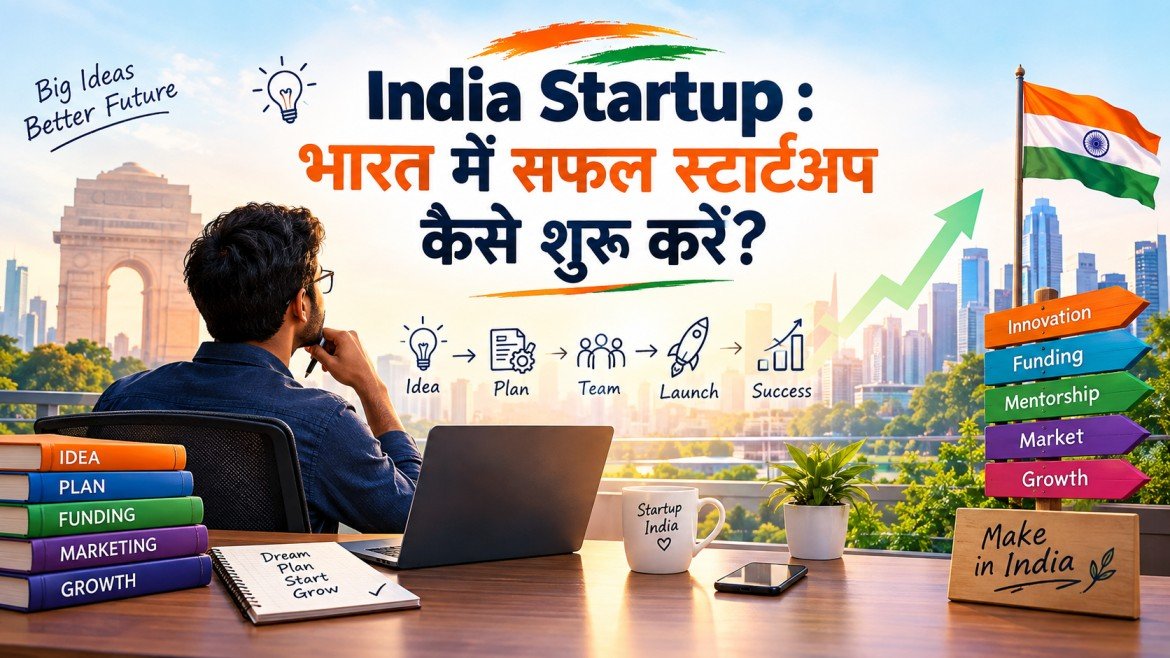
आज भारत में नया बिजनेस शुरू करने का तरीका तेजी से बदल रहा है। इंटरनेट, डिजिटल पेमेंट, क्लाउड टेक्नोलॉजी, आर्टिफिशियल इंटेलिजेंस और ऑनलाइन मार्केटप्लेस ने छोटे आइडिया को बड़े बाजार तक पहुंचाने की संभावनाएं बढ़ाई हैं। लेकिन केवल एक अच्छा आइडिया होना सफलता की गारंटी नहीं है। एक मजबूत समस्या, स्पष्ट ग्राहक, सही बिजनेस मॉडल, सक्षम टीम और लगातार सीखने की क्षमता मिलकर किसी स्टार्टअप को टिकाऊ बनाती है।
India Startup शुरू करने की सोच रखने वाले व्यक्ति के लिए सबसे महत्वपूर्ण सवाल यह नहीं है कि “मुझे कौन-सा बिजनेस शुरू करना चाहिए?”, बल्कि यह है कि “मैं किस वास्तविक समस्या को बेहतर, तेज या सस्ता तरीके से हल कर सकता हूं?” यही सोच आइडिया को बिजनेस में बदलने की शुरुआत करती है।
यह गाइड आपको आइडिया चुनने से लेकर बाजार की जांच, MVP, टीम, फंडिंग, मार्केटिंग, संचालन, जोखिम और भविष्य की दिशा तक एक व्यावहारिक रोडमैप देगा।
इस पूरी प्रक्रिया में धैर्य भी उतना ही महत्वपूर्ण है। शुरुआती चरण में assumptions गलत साबित हो सकती हैं, pricing बदल सकती है और product कई बार सुधारना पड़ सकता है। इसलिए हर निर्णय को छोटे प्रयोग, ग्राहक feedback और वास्तविक business data से validate करना चाहिए, ताकि संसाधनों का उपयोग सोच-समझकर हो।
Table of Contents
India Startup के लिए सही समस्या खोजें
कई लोग स्टार्टअप शुरू करते समय ऐप, वेबसाइट या AI tool बनाने से शुरुआत करते हैं। बेहतर तरीका समस्या से शुरुआत करना है। पहले यह समझें कि ग्राहक किस परेशानी के लिए समय, पैसा या मेहनत खर्च कर रहा है।
उदाहरण के लिए, यदि छोटे व्यवसायों को insurance claims की documentation में बार-बार देरी होती है, तो document collection, validation और status tracking को सरल करने वाला समाधान एक व्यावसायिक अवसर बन सकता है।
India Startup के लिए समस्या की जांच करते समय ये सवाल पूछें:
- ग्राहक की वास्तविक परेशानी क्या है?
- यह समस्या कितनी बार आती है?
- वर्तमान समाधान में क्या कमी है?
- ग्राहक अभी इसके लिए कितना भुगतान करता है?
- क्या समस्या पर्याप्त बड़ी customer segment में मौजूद है?
Customer Interviews क्यों जरूरी हैं?
संभावित ग्राहकों से बातचीत करें। उनसे अपने product की तारीफ करवाने के बजाय उनके वर्तमान व्यवहार के बारे में पूछें। “आप अभी यह काम कैसे करते हैं?” और “इस प्रक्रिया में सबसे ज्यादा समय कहां लगता है?” जैसे सवाल अधिक उपयोगी होते हैं।
India Startup के लिए Market Research
अच्छा विचार होने के बावजूद बाजार छोटा हो सकता है या पहले से कई मजबूत competitors मौजूद हो सकते हैं। इसलिए शुरुआत में market research करना जरूरी है।
Market research में तीन स्तर देखें:
- Customer: कौन खरीदेगा?
- Competitor: ग्राहक आज किससे समाधान ले रहा है?
- Market: भविष्य में इस समस्या का आकार और व्यवहार कैसे बदल सकता है?
प्रतियोगियों की वेबसाइट, pricing, customer reviews, features और positioning का अध्ययन करें। केवल उनकी कमियां ढूंढना पर्याप्त नहीं है। यह समझना भी जरूरी है कि ग्राहक उन्हें क्यों चुनते हैं।
India Startup की competitive strategy में एक स्पष्ट differentiation होना चाहिए। यह कम कीमत, बेहतर user experience, niche specialization, तेज service, automation या किसी विशिष्ट customer segment पर focus हो सकता है।
India Startup का Target Audience
“भारत के सभी लोग मेरे ग्राहक हैं” एक उपयोगी target market नहीं है। शुरुआत में छोटा और स्पष्ट customer segment चुनें।
उदाहरण:
- छोटे manufacturing businesses
- independent insurance agents
- college students
- urban working professionals
- small retailers
- online sellers
- SMEs
एक basic customer persona बनाएं:
नाम: राहुल
उम्र: 30–40 वर्ष
भूमिका: Small business owner
समस्या: Manual reporting में अधिक समय
वर्तमान समाधान: Excel और messaging apps
जरूरत: सरल automated dashboard
भुगतान क्षमता: monthly subscription
यह persona product decisions और marketing message दोनों को स्पष्ट करता है।
India Startup का MVP बनाएं
MVP यानी Minimum Viable Product ऐसा शुरुआती product है जिसमें समस्या हल करने के लिए जरूरी minimum features मौजूद हों। इसका लक्ष्य perfect product बनाना नहीं, बल्कि वास्तविक ग्राहक से जल्दी सीखना है।
मान लीजिए आप expense-management platform बना रहे हैं। शुरुआत में आपको dozens of features की जरूरत नहीं हो सकती। Basic expense entry, receipt upload, category और report जैसे features से शुरुआती validation हो सकती है।
India Startup के MVP को तीन प्रश्नों का उत्तर देना चाहिए:
- क्या ग्राहक product को समझता है?
- क्या product उसकी समस्या हल करता है?
- क्या ग्राहक इसके लिए भुगतान या उपयोग जारी रखने को तैयार है?
MVP की सामान्य गलतियां
- जरूरत से ज्यादा features
- launch से पहले बहुत लंबी development
- ग्राहक से feedback न लेना
- केवल दोस्तों की राय पर भरोसा करना
- technology को problem से ज्यादा महत्व देना
India Startup का Business Model तय करें
Product बनाना और पैसा कमाना दो अलग बातें हैं। इसलिए शुरुआत में revenue model पर विचार करें।
संभावित models:
- Subscription
- Commission
- Marketplace fee
- Freemium
- Transaction fee
- Licensing
- B2B contract
- Usage-based pricing
उदाहरण के लिए B2B SaaS में monthly subscription प्रभावी हो सकता है, जबकि marketplace transaction पर commission ले सकता है।
एक सरल financial model बनाएं:
Revenue = Customers × Average Revenue per Customer
इसके साथ customer acquisition cost, gross margin, operating expenses और cash runway को track करें।
India Startup का Legal और Business Structure
India Startup शुरू करने से पहले founders को अपने business structure, agreements, intellectual property, taxation, accounting और compliance requirements को समझना चाहिए। आवश्यकतानुसार qualified legal या financial professional से सलाह लेना उपयोगी है।
India Startup के लिए documentation को शुरुआत से व्यवस्थित रखना आगे fundraising, partnerships और audits में मदद कर सकता है।
ध्यान देने योग्य क्षेत्रों में शामिल हैं:
- Founder agreement
- Ownership और equity records
- Employment/consulting agreements
- Intellectual property ownership
- Privacy और data protection
- Customer contracts
- Accounting records
- Applicable registrations और compliance
किसी सरकारी योजना, कर लाभ या registration requirement को लागू करने से पहले उसके नवीनतम आधिकारिक नियमों की जांच करें, क्योंकि पात्रता और प्रक्रियाएं बदल सकती हैं।
India Startup के लिए Founder और Team
एक founder हर काम लंबे समय तक अकेले नहीं संभाल सकता। Product, technology, sales, finance और operations के लिए अलग-अलग क्षमताओं की जरूरत पड़ सकती है।
Co-founder चुनते समय केवल दोस्ती या पुराने परिचय को आधार न बनाएं। Skill complementarity, commitment, decision-making style और ownership expectations पर स्पष्ट बातचीत करें।
India Startup में शुरुआती टीम छोटी हो सकती है, लेकिन roles स्पष्ट होने चाहिए। एक व्यक्ति product और technology संभाल सकता है, दूसरा sales और partnerships, जबकि finance और legal के लिए external experts का उपयोग किया जा सकता है।
India Startup में Funding की जरूरत कब है?
हर startup को शुरुआत में venture capital की आवश्यकता नहीं होती। यदि product कम लागत में बनाया जा सकता है और शुरुआती customers से revenue आ सकता है, तो bootstrapping एक विकल्प हो सकता है।
Funding के संभावित स्रोत:
- Founder savings
- Friends and family
- Angel investors
- Incubators
- Accelerators
- Bank या business financing
- Strategic investors
- Venture capital
फंडिंग लेने से पहले यह समझें कि पैसा किस milestone को हासिल करने के लिए चाहिए। केवल valuation या बड़ी funding headline पर ध्यान देना उपयोगी नहीं है।
India Startup के लिए investor conversation में problem, market, product, traction, business model, unit economics, team और use of funds स्पष्ट होना चाहिए।
Product-Market Fit की ओर बढ़ें
Product-Market Fit का अर्थ यह समझना है कि product किसी स्पष्ट बाजार की महत्वपूर्ण समस्या को इस तरह हल कर रहा है कि ग्राहक उसे उपयोग करना और अपनाना चाहते हैं।
कुछ संकेत:
- Repeat usage बढ़ना
- Customer retention मजबूत होना
- Organic referrals मिलना
- Paid customers की संख्या बढ़ना
- Support requests का pattern स्पष्ट होना
- Customers का product छोड़ना कम होना
एक महत्वपूर्ण बात यह है कि growth के आंकड़ों को context के साथ पढ़ें। Downloads बढ़ना अपने आप में product success साबित नहीं करता। Active users, retention, revenue और customer satisfaction अधिक उपयोगी संकेत हो सकते हैं।
India Startup की Marketing Strategy
अच्छा product भी बिना distribution के सफल नहीं हो सकता। शुरुआत में एक या दो channels पर focus करें।
Content Marketing
Educational articles, case studies, videos और webinars के माध्यम से customer problems पर उपयोगी जानकारी दें।
Social Media
LinkedIn, Instagram, YouTube या अन्य platforms का चयन target audience के अनुसार करें। हर platform पर एक साथ उपस्थित होना जरूरी नहीं है।
Search Marketing
Relevant search queries के लिए helpful landing pages और content तैयार करें। SEO का उद्देश्य केवल traffic नहीं, बल्कि relevant customers तक पहुंच होना चाहिए।
Partnerships
Industry associations, consultants, distributors या complementary software providers के साथ partnerships नए customers तक पहुंच दे सकती हैं।
India Startup की marketing में “हम सबसे अच्छे हैं” जैसे सामान्य संदेश के बजाय measurable customer benefit दिखाना अधिक प्रभावी हो सकता है।
सफल Startup के लिए प्रमुख चुनौतियां
भारत में entrepreneurship के अवसरों के साथ कई practical challenges भी हैं। India Startup founders को इन चुनौतियों के लिए पहले से तैयार रहना चाहिए।
1. Customer Acquisition
पहले customers ढूंढना अक्सर product बनाने से कठिन हो सकता है। Founder-led sales शुरुआती चरण में उपयोगी हो सकती है।
2. Cash Flow
Revenue आने में समय लग सकता है। इसलिए realistic financial planning जरूरी है।
3. Competition
किसी आकर्षक बाजार में नए competitors जल्दी आ सकते हैं। Continuous differentiation जरूरी है।
4. Talent
विशेषज्ञ talent महंगा और competitive हो सकता है। Remote hiring, contractors और focused team structure विकल्प हो सकते हैं।
5. Compliance
Sector और business model के अनुसार regulatory requirements अलग हो सकती हैं। इन्हें शुरुआत में समझना बाद की समस्याओं को कम कर सकता है।
6. Founder Burnout
लंबे working hours और लगातार uncertainty founder productivity को प्रभावित कर सकते हैं। Sustainable work practices भी business strategy का हिस्सा हैं।
India Startup के लिए भारत में अवसर
भारत का बड़ा consumer और business ecosystem विभिन्न क्षेत्रों में नए products और services के अवसर पैदा करता है। India Startup के लिए opportunity केवल consumer apps तक सीमित नहीं है।
संभावित क्षेत्र:
- InsurTech
- FinTech
- HealthTech
- EdTech
- Agritech
- ClimateTech
- Cybersecurity
- SaaS
- AI applications
- Logistics technology
- Manufacturing technology
- Rural commerce
- Enterprise automation
विशेष रूप से niche B2B problems पर ध्यान देने वाले founders ऐसे products बना सकते हैं जिनका customer base छोटा हो, लेकिन revenue per customer अधिक हो।
भविष्य में India Startup Ecosystem के प्रमुख Trends
आने वाले वर्षों में startup building अधिक technology-driven और capital-conscious हो सकती है।
AI-Native Startups
AI केवल feature नहीं, बल्कि core product architecture का हिस्सा बन सकता है। Agentic workflows, AI copilots और domain-specific models नए business models को जन्म दे सकते हैं।
B2B और Vertical SaaS
Industry-specific software जैसे insurance, manufacturing, logistics और compliance solutions में specialization बढ़ सकता है।
Tier-2 और Tier-3 Markets
डिजिटल infrastructure और smartphone adoption के विस्तार से छोटे शहरों में नए consumer और business opportunities विकसित हो सकती हैं।
Climate और Sustainability
Energy efficiency, waste management, electric mobility और resource optimization जैसी समस्याओं पर technology-based solutions की मांग बढ़ सकती है।
Trust और Responsible AI
AI adoption बढ़ने के साथ privacy, security, explainability और governance अधिक महत्वपूर्ण हो सकते हैं।
India Startup founders के लिए इसका अर्थ है कि केवल growth नहीं, बल्कि trust, efficiency और long-term customer value पर भी ध्यान देना होगा।
India Startup का Practical Roadmap
यदि आप India Startup अगले 12 महीनों में शुरू करना चाहते हैं, तो यह framework उपयोगी हो सकता है:
Month 1–2: Problem discovery और customer interviews
Month 3: Market research और business model
Month 4–5: MVP development
Month 6: Pilot customers
Month 7–8: Feedback और product improvement
Month 9: Pricing और repeatable sales process
Month 10: Marketing channels
Month 11: Financial review और growth planning
Month 12: Scale या pivot का data-based decision
यह timeline हर business के लिए समान नहीं होगी। Technology, industry regulation, capital requirement और product complexity के अनुसार समय बदल सकता है।
India Startup शुरू करने से पहले Checklist
Launch से पहले खुद से पूछें:
- क्या समस्या वास्तविक है?
- क्या मैंने पर्याप्त potential customers से बात की है?
- क्या target audience स्पष्ट है?
- क्या MVP का scope सीमित है?
- क्या revenue model समझ में आता है?
- क्या competitors का analysis किया है?
- क्या founder roles स्पष्ट हैं?
- क्या financial runway का अनुमान है?
- क्या legal और compliance requirements समझी हैं?
- क्या customer acquisition strategy है?
- क्या data security और privacy का plan है?
- क्या success metrics तय हैं?
यदि इन सवालों के जवाब स्पष्ट नहीं हैं, तो launch को जल्दी करने के बजाय validation पर अधिक समय देना बेहतर हो सकता है।
उदाहरण: India Startup कैसे शुरू हो सकता है?
मान लीजिए एक founder ने देखा कि छोटे insurance brokers policy documents और claims information को अलग-अलग spreadsheets और messaging apps में manage करते हैं।
Founder पहले 30–50 brokers से interviews करता है। वह पाता है कि document tracking और follow-up में सबसे ज्यादा समय लगता है। इसके बाद वह एक छोटा web-based MVP बनाता है जिसमें document upload, status tracking और reminders होते हैं।
कुछ शुरुआती users product को test करते हैं। Feedback के आधार पर unnecessary features हटाए जाते हैं और सबसे उपयोगी workflow को बेहतर किया जाता है। बाद में subscription pricing test की जाती है।
इस उदाहरण का महत्वपूर्ण हिस्सा technology नहीं, बल्कि problem → validation → MVP → feedback → pricing → repeatable growth का क्रम है।
India Startup शुरू करने वाले नए founders इस framework को अपनी industry के अनुसार बदल सकते हैं।
निष्कर्ष
सफल India Startup केवल एक शानदार idea से नहीं बनता। इसके लिए वास्तविक समस्या की पहचान, customer validation, focused MVP, मजबूत team, sustainable business model, disciplined finance और effective distribution की जरूरत होती है।
शुरुआत में बहुत बड़ा product बनाने की बजाय एक स्पष्ट समस्या को छोटे स्तर पर हल करना अधिक व्यावहारिक हो सकता है। ग्राहक क्या चाहते हैं, वे किस चीज के लिए भुगतान करते हैं और product के साथ उनका व्यवहार कैसा है—इन संकेतों से लगातार सीखना चाहिए।
भविष्य में AI, SaaS, digital commerce, climate technology, cybersecurity, healthcare और industry-specific software जैसे क्षेत्रों में नए अवसर बन सकते हैं। लेकिन technology के साथ trust, security, compliance और customer value को भी बराबर महत्व देना होगा।
यदि आपके पास कोई business idea है, तो उसे केवल सपना बनाकर न रखें। उसे problem statement में बदलें, customers से बात करें, छोटा experiment करें, MVP बनाएं और वास्तविक feedback के आधार पर आगे बढ़ें। यही disciplined approach एक सामान्य idea को टिकाऊ business में बदलने की दिशा में ले जा सकती है।